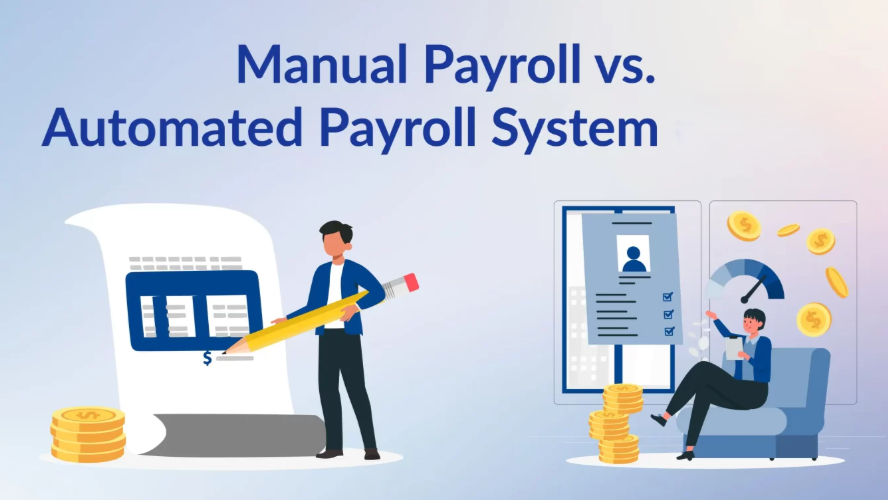
Manual Excel payroll exposes Kenyan businesses to high calculation-error rates, weak audit trails, poor data security, and slow adaptation to tax changes. Automated payroll systems integrate PAYE, statutory deductions, and compliance updates in real time, reducing KRA audit exposure.
Key Takeaways
Manual Excel payroll is highly dependent on individual input, making it vulnerable to human error, manipulation, weak audit trails, and security gaps.
Automated payroll systems integrate PAYE calculations, statutory deductions, and compliance updates in real time, unlike spreadsheets that need manual updates.
Even small Excel errors can lead to KRA penalties or audits, especially under PAYE enforcement rules.
Payroll software provides automation but needs internal expertise, while outsourcing adds compliance expertise and risk mitigation; a hybrid model offers balanced control.
Excel files stored locally or shared by email create security risks such as unauthorized access, data loss, version control issues, lack of encryption, and internal fraud exposure.
Transitioning from Manual Spreadsheets to Automated Payroll Systems
Manual payroll processing using Excel remains common among small and mid-sized businesses in Kenya. However, as regulatory enforcement by the Kenya Revenue Authority (KRA) becomes increasingly digital and data-driven, reliance on spreadsheets exposes organizations to significant financial, compliance, and operational risks.
Modern businesses are now shifting toward automated payroll systems Kenya solutions and professional outsourcing models to improve accuracy, security, and compliance efficiency.
Automated Payroll Systems Kenya: Why Are Businesses Moving Away from Excel?
Automated payroll systems Kenya are replacing manual Excel-based processes due to increasing complexity in tax rules, statutory deductions, and reporting requirements. Unlike spreadsheets, automated systems integrate PAYE calculations, statutory deductions, and compliance updates in real time.
Manual systems often fail to adapt to:
Frequent tax law updates
SHIF and NSSF contribution changes
Real-time KRA reporting requirements
Employee benefits taxation rules
Businesses seeking accuracy and compliance stability are increasingly adopting structured Payroll Services.
Replace Excel Payroll Processing: What Are the Risks of Manual Systems?
Replace Excel payroll processing decisions are driven by high error rates and lack of audit control in manual systems. Excel-based payrolls are highly dependent on individual input, making them vulnerable to human error and manipulation.
Risk Area
Excel Payroll
Automated Payroll Systems
Calculation Errors
High risk
Automated accuracy
Tax Updates
Manual updates required
Real-time updates
Audit Trail
Weak or missing
Fully traceable
Data Security
Vulnerable
Encrypted systems
Even small errors can lead to penalties or audits from KRA, especially under PAYE enforcement rules.
Payroll Software vs Outsourcing: Which Is Better for Kenyan Businesses?
Payroll software vs outsourcing is a critical decision for finance leaders. While software improves automation, outsourcing provides expert oversight, compliance assurance, and risk mitigation.
Option
Advantages
Limitations
Payroll Software
Automation, speed
Requires internal expertise
Outsourcing
Compliance + expertise
External dependency
Hybrid Model
Balanced control
Requires coordination
Many Kenyan companies prefer outsourcing to specialized providers like Adamjee due to regulatory complexity and audit exposure.
Payroll Data Security Nairobi: Why Is Excel a High-Risk System?
Payroll data security Nairobi is a growing concern as businesses handle sensitive employee information such as salaries, tax numbers, and bank details. Excel files stored locally or shared via email present significant security vulnerabilities.
Risks include:
Unauthorized file access
Accidental data loss
Version control issues
Lack of encryption
Internal fraud exposure
Automated systems and outsourced providers implement structured cybersecurity controls aligned with professional standards under the Institute of Certified Public Accountants of Kenya (ICPAK).
Outsource HR Finance: How Does It Improve Payroll Accuracy?
Outsource HR finance functions allow businesses to transfer payroll responsibility to specialized professionals who manage compliance, reporting, and statutory deductions.
Key benefits include:
Reduced payroll errors
Guaranteed compliance with KRA rules
Real-time statutory updates
Improved audit readiness
Scalable payroll processing
Outsourcing also aligns payroll management with broader financial controls supported by CFO Advisory Services.
Risks of Manual Payroll Systems in Kenya
Manual payroll systems expose businesses to significant operational and regulatory risks, especially under Kenya’s evolving digital tax environment.
Key risks include:
Incorrect PAYE computation
Late statutory submissions
Inconsistent payroll records
Increased KRA audit exposure
Employee payment disputes
These risks increase significantly when businesses scale without upgrading systems.
For compliance assurance, organizations should adopt structured Audit and Assurance frameworks.
Benefits of Automated Payroll Systems Kenya
Automated payroll systems Kenya offer improved efficiency, compliance, and data security compared to manual systems.
Key benefits include:
Automated tax calculations
Real-time compliance updates
Integrated statutory deductions
Secure data storage
Reduced administrative workload
Automation ensures payroll alignment with KRA requirements and reduces human dependency.
Why Businesses Are Choosing Adamjee Payroll Advisory
Adamjee payroll advisory provides end-to-end payroll management combining automation, compliance expertise, and risk control. This approach eliminates Excel dependency while ensuring full regulatory compliance.
Services include:
Payroll processing and automation
PAYE compliance management
Statutory deductions handling
Payroll audit support
HR finance outsourcing
Businesses can transition smoothly from manual systems using structured Payroll Services.
Strategic Outlook for Payroll Transformation in Kenya
The shift from manual spreadsheets to automated payroll systems Kenya is no longer optional—it is a compliance necessity. As KRA continues to digitize tax enforcement and integrate payroll data systems, businesses relying on Excel face increasing compliance risk.
Gain Clarity and Confidence in Your Finances Navigate the complexities of compliance, tax, and financial management with a trusted partner. Adamjee Auditors, a member of Santa Fe Associates International (SFAI), provides world-class audit, tax, and advisory services to help your business achieve its goals. Schedule a consultation with our expert team in Nairobi or Mombasa to discuss your business needs. Nairobi Office:
Park View Heights, Mombasa Road / Mbandu Complex, Langata Road |
Why are Kenyan businesses moving away from Excel payroll?
Increasing complexity in tax rules, statutory deductions, and reporting requirements, plus digital KRA enforcement, means manual Excel systems struggle to adapt to frequent tax law updates, SHIF and NSSF changes, and real-time reporting, raising compliance risk.
What are the main risks of manual payroll systems?
Manual systems risk incorrect PAYE computation, late statutory submissions, inconsistent payroll records, increased KRA audit exposure, and employee payment disputes, and these risks grow significantly as businesses scale without upgrading systems.
Should a business choose payroll software or outsourcing?
Payroll software offers automation and speed but requires internal expertise, while outsourcing provides compliance assurance and expert oversight with some external dependency. A hybrid model balances control but requires coordination.
Why is Excel a high-risk system for payroll data security?
Excel files stored locally or shared via email create vulnerabilities including unauthorized file access, accidental data loss, version control issues, lack of encryption, and internal fraud exposure, unlike automated or outsourced systems with structured cybersecurity controls.
How does outsourcing HR and finance improve payroll accuracy?
Outsourcing transfers payroll to specialists who manage compliance, reporting, and statutory deductions, delivering reduced errors, guaranteed compliance with KRA rules, real-time statutory updates, improved audit readiness, and scalable processing.