
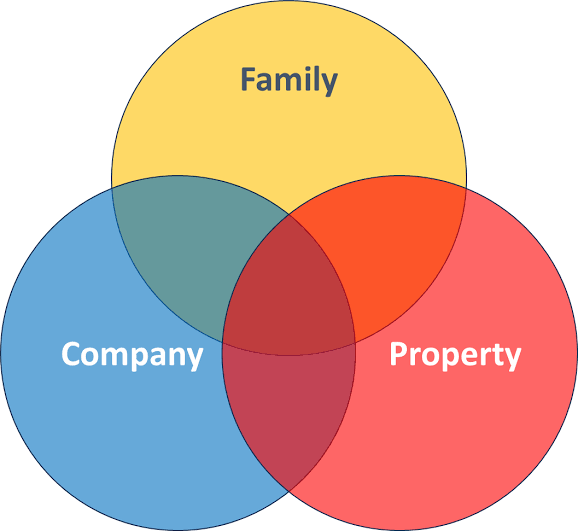
- Ownership succession, which covers share transfer, wealth preservation, family ownership structure and estate planning, is a separate decision from management succession, which covers leadership responsibilities, daily operations, strategic decisions and employee management.
- Businesses without a succession plan risk leadership conflicts, family disputes, loss of customers, poor decision-making, share ownership disagreements and declining company value.
- Ownership transfers may create tax obligations if not properly structured, so families should consider capital gains tax implications, share transfer requirements, asset transfers, estate planning considerations, income tax consequences and stamp duty obligations where applicable.
- For limited companies, share transfers must follow proper corporate procedures, including maintaining accurate company records and complying with legal requirements.
- The next generation should be prepared long before the handover through working in different departments, understanding financial statements, learning customer relationships, developing leadership skills, understanding company strategy and participating in decision-making.
- In 2026, family businesses should pay greater attention to corporate governance, accurate financial reporting, digital record keeping, tax compliance, share ownership documentation and long-term strategic planning.
Family business succession in Kenya requires more than choosing the next leader. It involves planning ownership transfer, tax obligations, governance structures, family expectations, and the long-term survival of the company.
Many successful Kenyan businesses begin as family enterprises. A founder builds the company through years of hard work, personal relationships, and operational knowledge. However, when the time comes to transfer leadership to the next generation, many businesses struggle because succession planning was delayed or never formally developed.
The challenge with family business succession in Kenya is that it combines business decisions with family relationships. Without proper planning, disagreements over ownership, management roles, shareholding, and financial expectations can damage a company that took decades to build.
A successful succession plan ensures that:
- Ownership transitions smoothly
- Leadership responsibilities are clear
- Family members understand their roles
- Tax obligations are managed
- Company value is protected
- The business continues growing beyond the founder
Adamjee Auditors helps family-owned businesses develop practical succession strategies, improve governance, manage tax considerations, and prepare companies for long-term continuity.
For professional guidance, businesses can access Adamjee Auditors’ Business Advisory Services:
Family business succession in Kenya is important because the survival of a company often depends on how well ownership and leadership transitions are managed.
Many founders postpone succession discussions because they believe there is still plenty of time. However, unexpected events such as illness, retirement, disputes, or sudden changes in circumstances can create uncertainty.
Without a succession plan, businesses may face:
- Leadership conflicts
- Family disputes
- Loss of customers
- Poor decision-making
- Share ownership disagreements
- Declining company value
A structured succession plan provides clarity before problems occur.
The plan should answer important questions such as:
- Who will manage the business?
- Who will own company shares?
- How will family members participate?
- What happens if someone wants to exit?
- How will decisions be made?
The Difference Between Ownership and Management Succession
One of the biggest mistakes in family business succession in Kenya is assuming that ownership and management should automatically move to the same person.
These are two separate decisions.
Ownership succession focuses on:
- Transfer of shares
- Wealth preservation
- Family ownership structure
- Estate planning
Management succession focuses on:
- Leadership responsibilities
- Daily operations
- Strategic decisions
- Employee management
A family member may inherit shares without necessarily becoming the best person to manage the company.
Successful family businesses separate these two areas and choose leaders based on skills, experience, and commitment.
Family Business Succession in Kenya: Preparing the Next Generation
The next generation should be prepared long before the actual handover takes place. Effective succession requires training, mentorship, and gradual transfer of responsibility.
Many businesses fail during transition because the incoming generation receives ownership without understanding how the company operates.
Preparation may include:
- Working in different departments
- Understanding financial statements
- Learning customer relationships
- Developing leadership skills
- Understanding company strategy
- Participating in decision-making
The founder’s knowledge and experience should be transferred gradually rather than disappearing after retirement.
A strong transition plan allows the next generation to build confidence while respecting the foundation created by previous leaders.
Family Business Succession in Kenya: Share Transfer and Ownership Planning
Ownership transfer is one of the most sensitive areas of succession planning.
Family businesses must consider:
- Who receives shares?
- Are shares transferred equally?
- Will non-active family members own shares?
- How are disputes resolved?
- What happens when a shareholder wants to sell?
For limited companies, share transfers must follow proper corporate procedures, including maintaining accurate company records and complying with legal requirements.
Poorly planned ownership transfers can create disagreements among family members and weaken company control.
Professional financial advice helps families evaluate different ownership structures while considering tax and legal implications.
Adamjee Auditors provides CFO Advisory Services to help businesses make informed decisions about ownership, financial planning, and long-term strategy:
Tax Considerations in Family Business Succession in Kenya
Tax planning is a critical part of family business succession in Kenya because ownership transfers may create tax obligations if not properly structured.
Businesses should consider:
- Capital gains tax implications
- Share transfer requirements
- Asset transfers
- Estate planning considerations
- Income tax consequences
- Stamp duty obligations where applicable
A poorly planned transfer can create unnecessary tax costs and reduce the value passed to the next generation.
Early planning allows families to explore suitable options and avoid rushed decisions.
Professional tax support ensures that succession plans align with current Kenyan tax requirements.
Adamjee Auditors provides Tax Compliance Advisory Services to help businesses manage tax obligations during ownership transitions:
Corporate Governance in Family-Owned Businesses
Strong governance is essential for successful family business succession in Kenya.
Family businesses should establish clear structures such as:
- Board responsibilities
- Management roles
- Shareholder agreements
- Decision-making procedures
- Conflict resolution mechanisms
Without governance, family relationships can interfere with professional business decisions.
A governance framework helps answer:
- Who makes operational decisions?
- Who approves major investments?
- How are disagreements handled?
- How are family members compensated?
Good governance protects both the family and the company.
Financial Records and Succession Readiness
A company cannot achieve successful succession without accurate financial information.
Reliable records help families understand:
- Business value
- Profitability
- Assets
- Liabilities
- Cash flow position
- Growth opportunities
Many family businesses rely heavily on informal records, especially where the founder personally manages finances.
Before succession, companies should strengthen:
- Accounting systems
- Financial reporting
- Internal controls
- Budgeting processes
Adamjee Auditors provides professional Bookkeeping Services to help businesses maintain accurate records and improve financial visibility:
Valuing a Family Business Before Transfer
Business valuation is an important step in succession planning.
A proper valuation helps determine:
- Company worth
- Share value
- Ownership fairness
- Buyout arrangements
- Investment decisions
Valuation may consider:
- Revenue performance
- Profitability
- Assets
- Market position
- Future growth potential
- Customer relationships
Without a clear valuation, family members may disagree about whether ownership transfers are fair.
Family Business Succession in Kenya and the Role of Professional Advisers
Successful succession usually requires several professional disciplines working together.
These may include:
- Accountants
- Tax advisers
- Lawyers
- Financial planners
- Business consultants
Professional advisers help families:
- Create realistic transition plans
- Identify risks
- Review tax implications
- Improve governance
- Protect business value
Succession is not a single event. It is a process that should begin years before leadership changes.
Using Technology to Support Succession Planning
Modern accounting systems help family businesses create transparency and improve decision-making.
Technology supports:
- Financial reporting
- Inventory management
- Budget tracking
- Performance analysis
- Document management
A business dependent on one person’s knowledge is difficult to transfer successfully.
Documenting systems and processes ensures the company continues operating even after leadership changes.
Family businesses remain an important part of Kenya’s economy, but many face challenges during ownership transitions.
In 2026, businesses should pay greater attention to:
- Corporate governance
- Accurate financial reporting
- Digital record keeping
- Tax compliance
- Share ownership documentation
- Long-term strategic planning
Companies should begin succession planning early rather than waiting until retirement or unexpected events force a transition.
A successful succession strategy protects the founder’s legacy while creating opportunities for the next generation.
Businesses requiring financial review and governance support can also benefit from Adamjee Auditors’ Audit & Assurance Services:
Conclusion: Building a Strong Future Through Family Business Succession in Kenya
Family business succession in Kenya is about protecting the value created by one generation while preparing the next generation for future success.
A successful transition requires careful planning around:
- Ownership
- Leadership
- Tax obligations
- Governance
- Financial systems
- Family expectations
Businesses that delay succession planning risk conflict, uncertainty, and loss of value.
By creating a structured succession plan early, family businesses can preserve their legacy, strengthen operations, and continue growing for generations.
Adamjee Auditors supports family-owned businesses through advisory, tax, accounting, and financial solutions designed to make succession smoother and more successful.
Gain Clarity and Confidence in Your Finances
Navigate the complexities of compliance, tax, and financial management with a trusted partner. Adamjee Auditors, a member of Santa Fe Associates International (SFAI), provides world-class audit, tax, and advisory services to help your business achieve its goals.
Whether you need succession planning support, tax advisory, bookkeeping, financial reporting, CFO advisory, or statutory audit services, our experienced professionals are ready to support your business with practical, compliant, and growth-focused financial solutions.
Schedule a consultation with our expert team in Nairobi or Mombasa to discuss your business needs.
Nairobi Office
1st Floor, Le’Mac Building, Church Road, off Waiyaki Way, Westlands
Phone: +254 717 908 241
Email: madamjee@adamjeeauditors.co.ke
Mombasa Office
Suite 401, Motorwalla Building
Jomo Kenyatta Road
Phone: +254 750 053 053
Email: info@adamjeeauditors.co.ke
Website:
https://adamjeeauditors.com/