Articles · Inventory & Cost Control Accounting Kenya
Perishable Stock Management: Reducing Wastage in Bakeries and Fresh Produce Businesses in Kenya
By Adamjee AuditorsPublished May 27, 20265 min read
Quick Answer
Perishable food stock control in Nairobi uses FIFO and structured inventory systems so older stock is used before newer stock, cutting wastage from expired bread, flour, dairy and produce that directly erodes profit, cash flow and gross margins.
Key Takeaways
FIFO (First In, First Out) is the foundation of perishable inventory control, ensuring older stock is used and sold before newer stock to reduce expiry risk.
Most food-sector wastage in Kenya stems not from production but from weak inventory control and poor documentation, including weak rotation, manual tracking and overstocking.
Optimization steps include FIFO labeling with delivery and expiry dates and batch numbers, daily stock movement monitoring, aligning production with demand, and smaller batch runs.
Stock wastage must be recorded in financial statements as an inventory loss expense, adjusted in closing stock valuation and reflected in cost of goods sold; unrecorded wastage is flagged in audits.
Fresh produce spoils faster than baked goods, so it needs daily reconciliation, cold storage monitoring, supplier delivery scheduling and dynamic pricing for near-expiry goods.
Food businesses in Kenya operate under tight margins and even tighter timelines. Bakeries, supermarkets, restaurants, and fresh produce distributors all depend on inventory that has a limited shelf life. Without proper systems, even small inefficiencies lead to direct financial losses.
Perishable food stock control Nairobi is therefore not just an operational process—it is a financial control system that determines whether a business remains profitable or leaks money through wastage.
Expired flour, unsold bread, spoiled vegetables, and over-purchased dairy products are not just inventory issues—they are cash flow problems. Every wasted item represents lost revenue and increased cost of goods sold.
This guide explains how to structure inventory systems, implement FIFO, and build financial discipline around perishable stock management in Kenya.
FIFO (First In, First Out) is the foundation of proper inventory management for perishable goods.
Under perishable food stock control Nairobi, FIFO ensures that older stock is used before newer stock to reduce expiry risks.
How FIFO Works in Practice
First goods received are used first
Stock is arranged by delivery date
Expiry-sensitive items are prioritized
New stock is stored behind older stock
This system reduces wastage and improves consistency in production and sales.
In 2026, food businesses in Kenya are increasingly expected to maintain traceable inventory records. FIFO compliance is now considered a key internal control during audits.
Causes of Inefficiency in Perishable Food Stock Control Nairobi
Many businesses struggle with wastage due to avoidable operational gaps.
1. Poor Demand Forecasting
Businesses overproduce during low-demand periods, leading to unsold stock.
2. Weak Inventory Rotation
Without FIFO discipline, older stock expires unnoticed.
3. Manual Tracking Systems
Spreadsheets and paper records often fail to capture expiry timelines accurately.
4. Overstocking Raw Materials
Bulk purchasing without demand planning increases spoilage risk.
5. Inadequate Storage Systems
Poor refrigeration or storage accelerates product degradation.
These issues significantly reduce profitability in bakeries and fresh produce businesses.
Most wastage-related losses in Kenya’s food sector are not caused by production issues but by weak inventory control systems and poor documentation practices.
Perishable Food Stock Control Nairobi: FIFO-Based Inventory Optimization
Effective inventory management requires structured systems that balance supply with demand.
Step 1: Implement Structured FIFO Labeling
Every stock item must be labeled with:
Delivery date
Expiry date
Batch number
Step 2: Monitor Daily Stock Movement
Track how ingredients move from storage to production.
Step 3: Align Production With Demand
Use sales history to adjust production volumes.
Step 4: Introduce Batch Production Systems
Instead of large production runs, use smaller, frequent batches.
Step 5: Track Ingredient Consumption Ratios
Monitor how much raw material is used per product line.
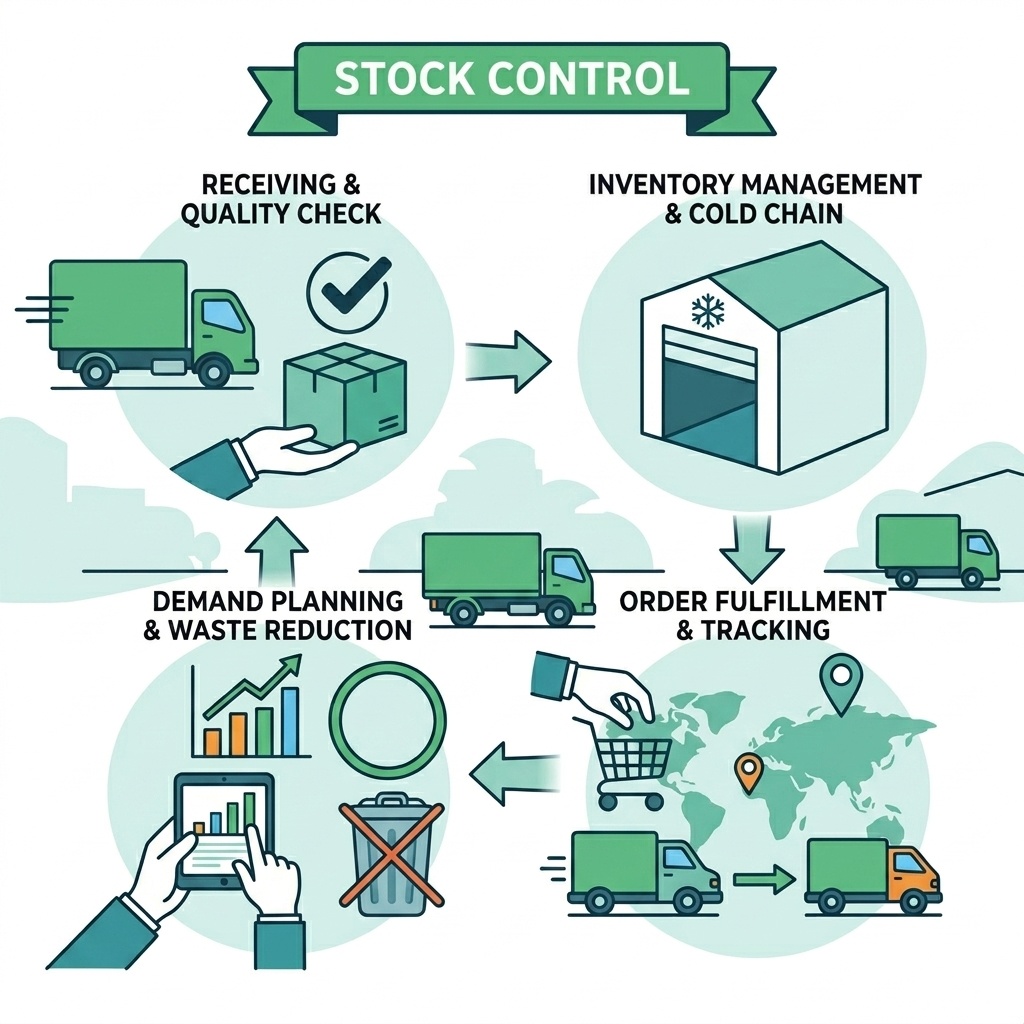
Businesses that integrate digital tracking into perishable food stock control Nairobi reduce wastage by improving visibility across the entire supply chain.
Perishable Food Stock Control Nairobi: Inventory Management for Fresh Produce Businesses
Fresh produce businesses face faster spoilage cycles than bakeries due to environmental sensitivity.
Key Challenges
Rapid spoilage of vegetables and fruits
Temperature fluctuations
Transport delays
Price volatility
Optimization Strategies
Daily stock reconciliation
Cold storage monitoring
Supplier delivery scheduling
Dynamic pricing for near-expiry goods
These systems reduce waste and improve revenue recovery.
Cold-chain logistics is becoming a key compliance focus in Kenya’s food supply chain industry.
Perishable Food Stock Control Nairobi: Accounting Treatment of Stock Wastage
Stock wastage must be properly recorded in financial statements.
Proper Accounting Treatment
Recorded as inventory loss expense
Adjusted in closing stock valuation
Reflected in cost of goods sold (COGS)
Accurate recording ensures compliance with financial reporting standards and improves transparency.
Businesses often rely on structured bookkeeping services to maintain accurate records.
Unrecorded wastage is increasingly flagged in audits as a sign of weak internal financial controls.
Perishable Food Stock Control Nairobi: Technology and Automation
Modern inventory systems are transforming how businesses manage perishable goods.
Key Features of Modern Systems
Barcode-based tracking
Expiry date alerts
Real-time stock dashboards
Automated stock deduction
Sales-integrated inventory systems
Benefits
Reduced human error
Faster reporting
Better forecasting
Lower wastage levels
AI-based inventory systems are increasingly being adopted by Nairobi bakeries and supermarkets to reduce wastage and improve forecasting accuracy.
Perishable Food Stock Control Nairobi: Common Mistakes Businesses Make
Many businesses lose money due to avoidable mistakes:
Ignoring expiry tracking
Overproduction during low demand
Poor staff training
Lack of stock reconciliation
Weak storage management
These mistakes directly increase wastage levels.
Financial Impact of Poor Stock Control
Even small inefficiencies can significantly affect financial performance.
Impacts include:
Reduced gross profit margins
Higher cost of goods sold
Cash flow instability
Reduced business scalability
Improving perishable food stock control Nairobi can directly increase profitability.
Strategic Importance of Perishable Stock Control
Strong inventory control helps businesses:
Reduce financial losses
Improve operational efficiency
Increase profitability
Strengthen supply chain stability
Enhance decision-making accuracy
It transforms inventory from a cost center into a controlled financial asset.
Conclusion: Turning Inventory Control Into Profitability
For bakeries and fresh produce businesses in Kenya, inventory management is not optional—it is a financial survival tool.
Implementing perishable food stock control Nairobi, FIFO systems, and structured tracking processes significantly reduces wastage and improves profitability.
Businesses that treat inventory as a financial control system rather than just physical stock consistently outperform competitors in efficiency and sustainability.
Gain Clarity and Confidence in Your Finances Navigate the complexities of compliance, tax, and financial management with a trusted partner. Adamjee Auditors, a member of Santa Fe Associates International (SFAI), provides world-class audit, tax, and advisory services to help your business achieve its goals.
Schedule a consultation with our expert team in Nairobi or Mombasa to discuss your business needs.
Nairobi Office
1st Floor, Le’Mac Building, Church Road, off Waiyaki Way, Westlands
FIFO (First In, First Out) means the first goods received are used first, with stock arranged by delivery date and new stock stored behind older stock. It reduces expiry-related wastage and improves consistency in production and sales.
Why do food businesses in Kenya lose money on perishable stock?
Most losses come from weak inventory control and poor documentation rather than production issues, including poor demand forecasting, weak stock rotation, manual tracking, overstocking raw materials and inadequate storage.
How should stock wastage be recorded in the accounts?
Wastage should be recorded as an inventory loss expense, adjusted in closing stock valuation and reflected in cost of goods sold. Accurate recording ensures compliance, and unrecorded wastage is increasingly flagged in audits as weak internal control.
How is managing fresh produce different from managing a bakery's stock?
Fresh produce spoils faster due to environmental sensitivity, temperature fluctuations and transport delays, so it requires daily stock reconciliation, cold storage monitoring, supplier delivery scheduling and dynamic pricing for near-expiry goods.
Can technology reduce perishable stock wastage?
Yes. Modern systems offer barcode-based tracking, expiry date alerts, real-time dashboards, automated stock deduction and sales-integrated inventory, which reduce human error, speed reporting, improve forecasting and lower wastage.