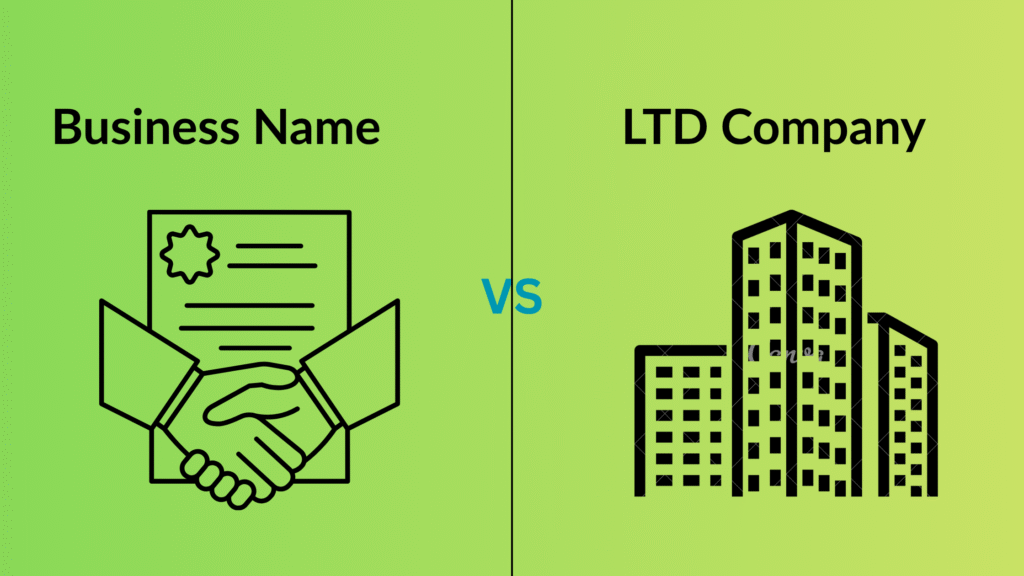
- A business name is tied directly to its owner, has no separate legal identity, and leaves the owner personally liable for business debts without limit.
- A limited company is governed by the Companies Act, 2015 and is legally separate from its shareholders, whose exposure is limited to their capital contribution.
- Both structures register through eCitizen, but a company also needs incorporation documents, appointment of directors and shareholders, a certificate of incorporation and KRA PIN and tax activation.
- Sole proprietorship income is taxed as personal income with no separation between personal and business money, while a company reports as a separate entity with more structured requirements.
- A business name carries no statutory audit requirement, whereas a limited company faces accounting and audit obligations, annual returns filing costs and company secretarial maintenance.
- Limited company compliance in 2026 includes beneficial ownership updates, statutory registers, annual returns and payroll compliance where employees exist.
Choosing the right business structure is one of the most important legal and financial decisions an entrepreneur will make in Kenya. The decision between a sole proprietorship (business name registration) and a limited company affects taxation, liability exposure, compliance obligations, funding ability, and long-term scalability.
Understanding register business name vs limited company Kenya is essential because the structure you choose at the start often determines how easily your business can grow, attract investors, and remain compliant under Kenyan law in 2026.
This guide provides a detailed comparison of both structures to help entrepreneurs make informed, compliant, and strategic decisions.
Understanding Register Business Name vs Limited Company Kenya
The choice between structures in Kenya often comes down to understanding register business name vs limited company Kenya and how each affects tax, liability, and growth.
A business name (sole proprietorship) is the simplest form of business registration, while a limited company is a separate legal entity with shareholders and directors. Each structure carries different legal and compliance implications under Kenyan law.
In simple terms:
- A business name is tied directly to the owner
- A limited company is legally separate from its owners
This distinction is the foundation of register business name vs limited company Kenya.
What is a Business Name Registration in Kenya?
A business name registration (sole proprietorship) is the most basic form of business structure in Kenya. It is commonly used by small traders, freelancers, and early-stage entrepreneurs.
Key features:
- Registered via eCitizen under the Business Registration Service (BRS)
- Owned by a single individual
- No separate legal identity from the owner
- Income taxed as personal income
A sole proprietorship is ideal for low-risk, small-scale businesses but has limitations in scalability and liability protection.
For registration support and compliance guidance:
Company Secretarial Services
What is a Limited Company in Kenya?
A limited company is a legally separate entity from its owners. It is governed under the Companies Act, 2015 and registered through the eCitizen platform.
Key features:
- Separate legal entity from shareholders
- Limited liability protection
- Ability to issue shares
- Higher compliance requirements
- Better access to funding and contracts
A limited company is generally preferred for businesses that plan to scale, hire employees, or attract investors.
Learn more about corporate structures:
About Adamjee Auditors
Register Business Name vs Limited Company Kenya: Key Differences
The differences in register business name vs limited company Kenya become clearer when comparing legal structure, taxation, compliance, and scalability.
| Feature | Business Name (Sole Proprietorship) | Limited Company |
|---|---|---|
| Legal Status | Not separate from owner | Separate legal entity |
| Liability | Unlimited personal liability | Limited liability |
| Ownership | Single owner | Shareholders |
| Taxation | Personal income tax | Corporate tax |
| Compliance Level | Low | High |
| Funding Access | Limited | Strong (equity/shares) |
| Growth Potential | Limited | High |
This comparison is central to understanding register business name vs limited company Kenya for long-term planning.
Registration Process on eCitizen
Both structures are registered through Kenya’s eCitizen platform, but the processes differ significantly.
Business Name Registration Process:
- Name search and reservation
- Application submission on eCitizen
- KRA PIN registration
- Payment of registration fee
- Issuance of certificate
Limited Company Registration Process:
- Name reservation
- Preparation of incorporation documents
- Appointment of directors and shareholders
- Submission via eCitizen
- Certificate of incorporation issuance
- KRA PIN and tax activation
For professional assistance:
Contact Adamjee Auditors
Cost Differences Between the Two Structures
Cost is a key factor in register business name vs limited company Kenya decisions.
Business Name Costs:
- Low registration fees
- Minimal compliance costs
- No statutory audit requirement
Limited Company Costs:
- Higher incorporation fees
- Annual returns filing costs
- Accounting and audit obligations
- Company secretarial maintenance
Proper financial structuring is essential for compliance:
Bookkeeping Services
Liability and Risk Exposure
One of the most important distinctions in register business name vs limited company Kenya is liability.
Business Name:
The owner is personally responsible for:
- Business debts
- Legal claims
- Tax obligations
Limited Company:
Liability is limited to:
- Company assets
- Shareholder capital contribution
This makes limited companies more suitable for:
- High-risk industries
- Contract-heavy operations
- Businesses seeking investors
Taxation Differences in Kenya
Tax treatment varies significantly between the two structures.
Business Name:
- Taxed under personal income tax
- Simple filing structure
- No separation between personal and business income
Limited Company:
- Subject to corporate tax
- Requires VAT registration where applicable
- PAYE obligations if employees exist
- More structured reporting requirements
Learn more about compliance:
Tax Compliance & Advisory Services
Compliance Requirements in 2026
Kenya’s regulatory environment in 2026 has become more automated and enforcement-driven.
Business Name Compliance:
- Business permit renewal
- Income tax filing
- County licensing compliance
Limited Company Compliance:
- Annual returns filing
- Beneficial ownership updates
- eTIMS invoice compliance
- Payroll compliance (if applicable)
- Statutory registers maintenance
Learn more:
Statutory Audit Kenya Guide
Scalability and Growth Potential
Understanding register business name vs limited company Kenya is essential for long-term scalability.
Business Name:
- Best for small-scale operations
- Limited investor interest
- Difficult to scale legally
Limited Company:
- Structured for growth
- Easier access to financing
- Ability to issue shares
- Higher credibility in contracts
Common Mistakes Entrepreneurs Make
Many entrepreneurs choose the wrong structure due to lack of advisory support.
Common mistakes include:
- Starting as sole proprietor for scalable businesses
- Ignoring tax implications
- Underestimating compliance obligations
- Delaying incorporation until growth phase
These mistakes often lead to restructuring costs and compliance complications later.
Strategic Business Structuring in Kenya (2026 Outlook)
Business structuring in Kenya is increasingly influenced by:
- Digital tax enforcement (eTIMS)
- Automated compliance tracking systems
- Investor due diligence requirements
- Cross-border business expansion
This makes choosing the right structure at inception more important than ever.
Conclusion
The decision between business name registration and a limited company is a strategic one that affects taxation, liability, compliance, and growth potential.
Ultimately, register business name vs limited company Kenya depends on business goals, risk tolerance, and long-term expansion plans. While sole proprietorships offer simplicity and low cost, limited companies provide stronger protection, credibility, and scalability.
Businesses should evaluate both options carefully before registration to avoid costly restructuring in the future.
Gain Clarity and Confidence in Your Finances Navigate the complexities of compliance, tax, and financial management with a trusted partner. Adamjee Auditors, a member of Santa Fe Associates International (SFAI), provides world-class audit, tax, and advisory services to help your business achieve its goals.
Schedule a consultation with our expert team in Nairobi or Mombasa to discuss your business needs.
Nairobi Office
1st Floor, Le’Mac Building, Church Road, off Waiyaki Way, Westlands
+254 717 908 241
madamjee@adamjeeauditors.co.ke
Mombasa Office
Suite 401, Motorwalla Building, Jomo