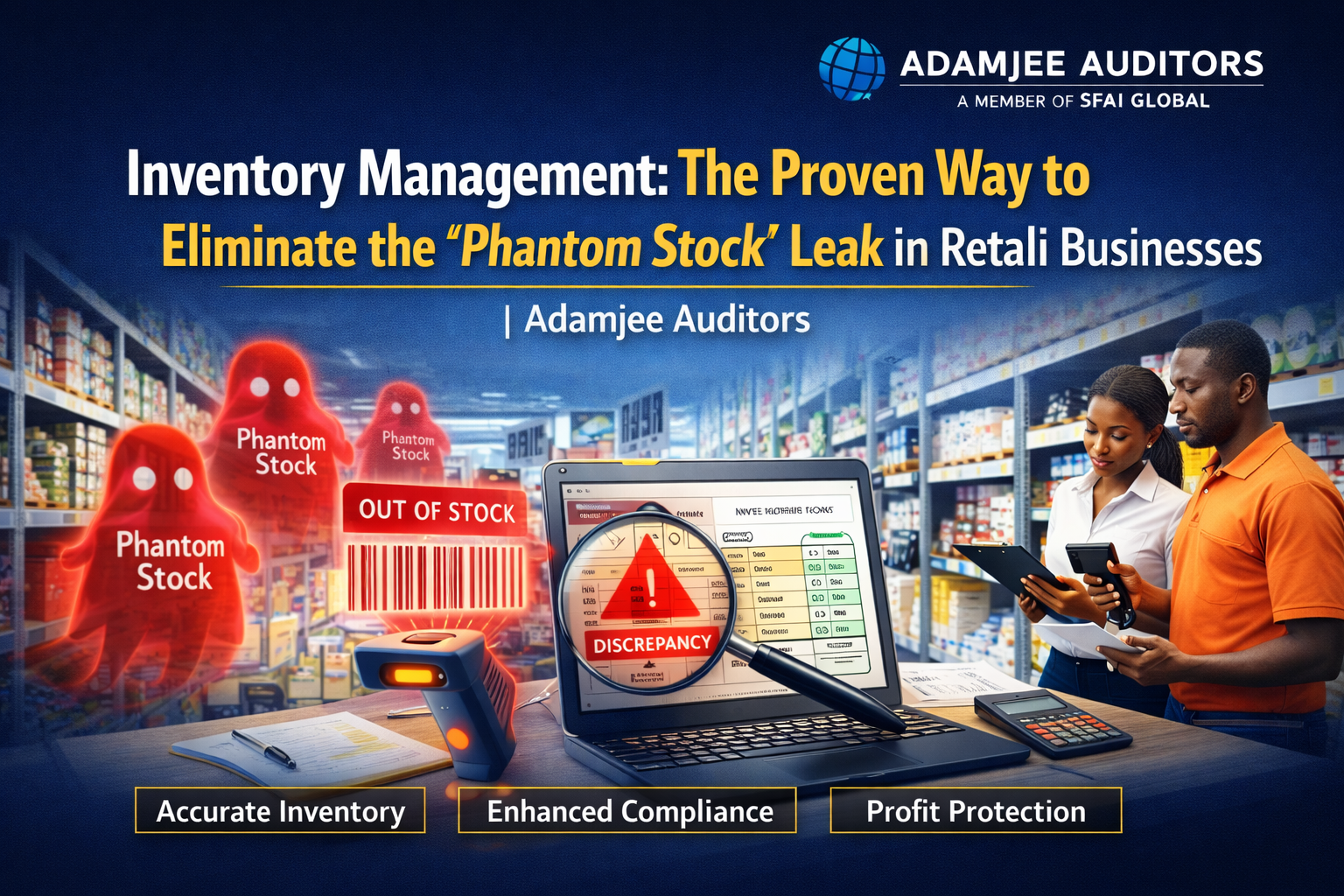
- Phantom stock is inventory that appears in records but does not physically exist, overstating assets, distorting cost of sales, and producing inaccurate tax reporting.
- It is a compliance and audit risk, not just operational, leading to overpaid income tax, incorrect VAT declarations, cash flow shortages, and failed audits or KRA penalties.
- Root causes include uncontrolled manual stock adjustments, theft and shrinkage, poor POS-accounting integration, lack of regular stock counts, and weak supplier controls.
- Under IAS 2, inventory must be stated at the lower of cost and net realizable value; phantom stock violates this and can trigger audit qualifications or adverse opinions.
- Detection relies on regular physical counts, inventory-to-sales ratio analysis, gross margin reviews, system reconciliation, and exception reports, while prevention rests on strong receiving, storage, sales, adjustment, and counting controls.
Inventory Management: The Proven Way to Eliminate the “Phantom Stock” Leak in Retail Businesses
Inventory losses are one of the most silent but destructive profit leaks in Kenyan retail businesses. Many retailers report healthy sales figures yet struggle with cash flow, unexplained stock shortages, and inconsistent financial reports. In most cases, the root cause is phantom stock—inventory that appears in records but does not physically exist.
Effective inventory management is the proven way to eliminate phantom stock, protect margins, and restore financial control in retail businesses. When inventory systems, accounting records, and tax compliance are misaligned, losses accumulate quietly until profitability is severely damaged.
Adamjee Auditors, a member of the SFAI Global network, works with Kenyan retailers to identify, quantify, and eliminate phantom stock through robust inventory controls, IFRS-aligned accounting, and strict KRA eTIMS compliance.
What Is Phantom Stock in Inventory Management?
Phantom stock refers to inventory recorded in accounting or POS systems that does not physically exist. It creates misleading financial statements, inflates profits on paper, and results in cash losses when businesses attempt to reorder or reconcile stock.
Phantom stock occurs when system records and physical stock counts diverge. The inventory “exists” digitally but cannot be found on shelves or in stores. Over time, this mismatch leads to overstated assets, incorrect cost of sales, and inaccurate tax reporting.
Common Examples in Kenyan Retail
-
Stock recorded as available but already stolen or damaged
-
POS sales not syncing with inventory systems
-
Manual adjustments made without audit trails
-
Supplier deliveries recorded but never received in full
Under 2026 KRA audit practices, inventory discrepancies are increasingly flagged during VAT, income tax, and compliance audits—especially where eTIMS sales data does not reconcile with cost of sales.
Why Phantom Stock Is a Serious Financial Risk for Retail Businesses
Phantom stock directly erodes profitability, distorts financial statements, and increases tax exposure. It is not just an operational issue—it is a compliance and audit risk.
When phantom stock exists, retail businesses often report profits that are not real. This leads to:
-
Overpayment of income tax
-
Incorrect VAT declarations
-
Cash flow shortages despite “profitable” accounts
-
Failed audits and KRA penalties
Financial Impact of Phantom Stock
| Area Affected | Business Consequence |
|---|---|
| Cost of Sales | Understated, inflating profits |
| Inventory Asset | Overstated on balance sheet |
| VAT | Incorrect input/output VAT |
| Cash Flow | Cash spent replacing missing stock |
| Tax Exposure | Risk of penalties and interest |
Many retail businesses fail audits not because of fraud, but because weak inventory management creates unreliable financial data. This is a key red flag in statutory audits and KRA investigations.
Root Causes of Phantom Stock in Retail Inventory Management
Phantom stock is usually caused by weak controls, system gaps, and poor reconciliation practices. Identifying the root cause is the first step toward eliminating the leak.
Key Causes
1. Manual Inventory Adjustments
Uncontrolled manual stock adjustments without approval or documentation are one of the biggest contributors to phantom stock.
2. Theft and Shrinkage
Internal theft, shoplifting, and supplier fraud often go unnoticed when inventory controls are weak.
3. Poor POS and Accounting Integration
Sales recorded through POS systems may not correctly update inventory or accounting records.
4. Lack of Regular Stock Counts
Without periodic physical counts, discrepancies accumulate over months or years.
5. Weak Supplier Controls
Partial deliveries recorded as full receipts inflate inventory figures.
Retailers using multiple systems without centralized reconciliation are especially vulnerable. Adamjee Auditors helps businesses integrate inventory data with bookkeeping services to maintain a single source of financial truth.
Inventory Management and IFRS Compliance
Inventory must be measured and reported accurately under IFRS to ensure reliable financial statements. Phantom stock leads to non-compliance and audit qualifications.
Under IAS 2 (Inventories), inventory must be stated at the lower of cost and net realizable value. Phantom stock violates this principle because the inventory does not exist at all.
IFRS Risks of Phantom Stock
-
Overstated assets on the balance sheet
-
Misstated gross profit margins
-
Incorrect cost allocation
-
Audit qualifications or adverse opinions
During audit and assurance services, inventory valuation and existence are among the most tested areas for retail businesses.
The Tax Implications of Poor Inventory Management in Kenya
Inventory discrepancies create direct tax risks under KRA regulations, especially with eTIMS integration. Unsupported inventory costs and mismatches can be disallowed for tax purposes.
Key Tax Risks
-
Income Tax: Inflated profits result in higher tax assessments
-
VAT: Incorrect input VAT claims if purchases cannot be matched to sales
-
Penalties: KRA penalties and interest for inaccurate filings
From January 1, 2026, KRA requires strict validation of expenses and sales through eTIMS. Inventory losses without supporting documentation are increasingly disallowed during audits.
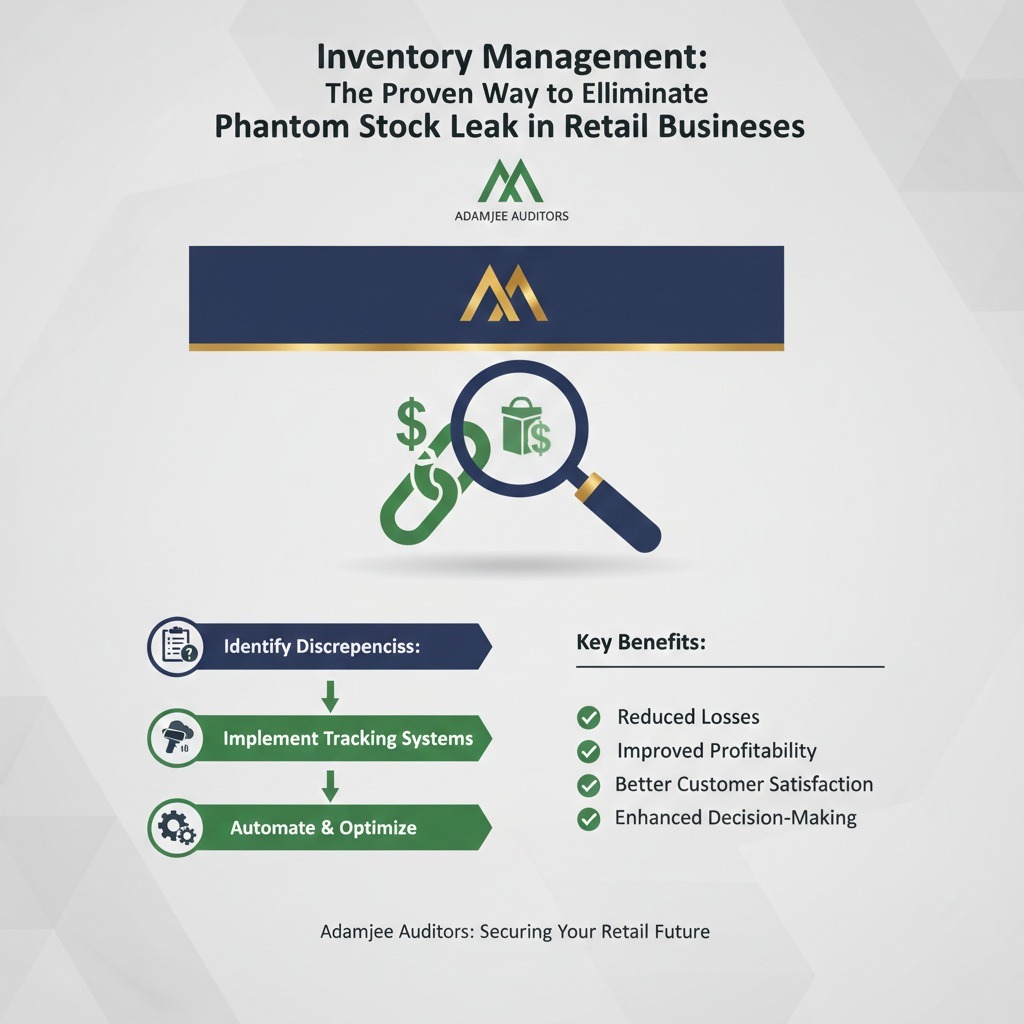
Retailers should engage tax compliance advisory to align inventory management with tax reporting requirements.
How to Detect Phantom Stock in Retail Businesses
Phantom stock can be detected through disciplined reconciliation, physical counts, and data analysis. Early detection prevents compounding losses.
Practical Detection Methods
-
Regular Physical Stock Counts (monthly or quarterly)
-
Inventory-to-Sales Ratio Analysis
-
Gross Margin Trend Reviews
-
Reconciliation Between POS, Inventory, and Accounting Systems
-
Exception Reports for Adjustments and Write-offs
Many Kenyan retailers discover phantom stock only during audits. Proactive reviews using CFO advisory services can identify leaks early and preserve cash.
Fixing Phantom Stock Through Strong Inventory Controls
Strong internal controls are the most effective way to eliminate phantom stock permanently. Controls must be preventative, detective, and corrective.
Essential Inventory Controls
| Control Area | Best Practice |
|---|---|
| Receiving | Independent verification of supplier deliveries |
| Storage | Restricted access to stock areas |
| Sales | Automated POS integration |
| Adjustments | Approval-based system controls |
| Counts | Scheduled and surprise stock counts |
Retailers with documented controls experience fewer audit queries and smoother statutory audits.
Technology’s Role in Eliminating Phantom Stock
Technology reduces human error and improves visibility across inventory systems. However, technology must be properly configured and monitored.
Key technology enablers include:
-
Integrated POS and accounting software
-
Barcode and SKU tracking
-
Cloud-based inventory systems
-
Automated reconciliation tools
Choosing the wrong system can worsen phantom stock issues. Retailers should align software selection with compliance needs, not just operational convenience.
The Role of Audits in Preventing Phantom Stock
Regular audits act as a deterrent and detection mechanism against inventory losses. They strengthen governance and accountability.
Audits help by:
-
Testing inventory existence and valuation
-
Reviewing internal controls
-
Identifying fraud risks
-
Ensuring compliance with IFRS and tax laws
Adamjee Auditors provides tailored audit solutions that go beyond compliance to uncover operational inefficiencies.
Building a Sustainable Inventory Management Framework
Sustainable inventory management requires policy, people, process, and technology working together. One-off fixes are not enough.
Key Elements
-
Documented inventory policies
-
Staff training and accountability
-
Management oversight and reporting
-
Continuous improvement through data
Retail businesses that treat inventory management as a financial discipline—not just an operational task—achieve stronger profitability and audit resilience.
Conclusion
Phantom stock is a hidden but solvable problem in retail inventory management. With strong controls, accurate accounting, and regulatory compliance, businesses can eliminate inventory leaks and restore profitability.
Inventory management is no longer optional—it is a financial control, a tax compliance issue, and a strategic necessity. Kenyan retail businesses that address phantom stock proactively protect margins, improve cash flow, and reduce audit risk.
Adamjee Auditors combines local expertise and SFAI Global standards to help retailers eliminate phantom stock through disciplined inventory management, IFRS-aligned reporting, and KRA-compliant processes.
Gain Clarity and Confidence in Your Finances
Navigate the complexities of compliance, tax, and financial management with a trusted partner. Adamjee Auditors, a member of Santa Fe Associates International (SFAI), provides world-class audit, tax, and advisory services to help your business achieve its goals.
Schedule a consultation with our expert team in Nairobi or Mombasa to discuss your business needs.
Nairobi Office 1st Floor, Le’Mac Building, Church Road, off Waiyaki Way, Westlands
+254 717 908 241
info@adamjeeauditors.com
Mombasa Office Suite 401, Motorwalla Building, Jomo Kenyatta Road
+254 703 899 606 / +254 717 908 241
info@adamjeeauditors.com
https://adamjeeauditors.com/