A three statement financial model should do more than produce attractive forecasts. It should connect the income statement, balance sheet and cash flow statement so that a change in one assumption flows logically through the entire business. When it does not tie, the problem is rarely just an Excel formula. It may indicate a broken accounting relationship, an unsupported assumption, an incomplete supporting schedule or a cash-flow error.
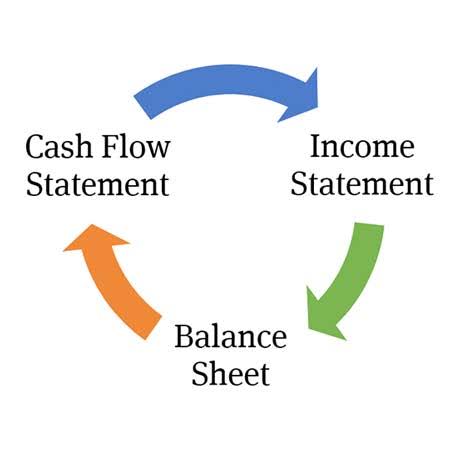
A properly built three statement financial model gives founders, finance teams, investors and lenders a connected view of profitability, financial position and cash generation. The income statement shows performance over a period, the balance sheet shows financial position at a point in time, and the cash flow statement explains how cash moved during the period. These statements are designed to work together, not operate as three independent forecasts.
For Kenyan businesses, the quality of the underlying accounting data matters even more when the model is being used for fundraising, valuation, lending, tax planning or board reporting. KRA has been validating declared income and expenses against sources including TIMS/eTIMS, withholding tax data and import records for the 2025 year of income, with further electronic-invoicing requirements applying to subsequent periods.
The objective of a three statement financial model is therefore not simply to make the balance sheet equal. It is to create a logical financial system in which the assumptions, accounting records, operating drivers and financing decisions all connect.
What Is a Three-Statement Financial Model?
A three statement financial model connects the income statement, balance sheet and cash flow statement into one integrated forecast. The model should allow operating, investing and financing assumptions to flow through all three statements without requiring arbitrary balancing figures.
The three core statements are:
- Income statement
- Balance sheet
- Cash flow statement
The income statement forecasts revenue, costs, operating expenses, financing costs, taxes and profit. The balance sheet forecasts assets, liabilities and shareholders’ equity. The cash flow statement explains the movement in cash through operating, investing and financing activities.
In a proper three statement financial model, these statements are connected through accounting relationships.
For example:
Revenue → profit → retained earnings → equity
At the same time:
Revenue → receivables → working capital → operating cash flow
And:
Capital expenditure → PP&E → depreciation → profit and cash flow
Similarly:
Debt raised → cash → debt balance → interest expense → profit
These relationships are what make the model dynamic.
If revenue increases, the model should not only show higher revenue. Depending on the assumptions, it may also show higher receivables, higher gross profit, higher tax, higher working capital requirements and ultimately a different cash balance.
That is the point of a three statement financial model.
Why Should the Three Statements Actually Tie?
A model that does not tie cannot reliably show the consequences of management decisions. A balanced model provides an important control that helps identify missing, duplicated or incorrectly linked transactions.
A three-statement model is useful because individual financial statements answer different questions.
The income statement asks:
Is the business profitable?
The balance sheet asks:
What does the business own and owe?
The cash flow statement asks:
Where did the cash come from and where did it go?
A three statement financial model brings those answers together.
Suppose a company forecasts KSh 50 million in additional sales. The income statement might show KSh 50 million of additional revenue. But the financial consequences depend on how customers pay.
If customers pay immediately, cash may increase quickly.
If customers receive 60-day credit, accounts receivable may increase substantially before the cash is collected.
If the business must purchase additional inventory before fulfilling those orders, inventory may increase as well.
If suppliers provide 30-day credit, accounts payable may partially finance the working-capital requirement.
A model that simply increases revenue and profit without modelling these balance-sheet consequences can make the company appear more liquid than it really is.
That is why the three statement financial model needs to connect operating assumptions with balance-sheet movements and cash flows.
Start With Reliable Historical Financial Data
A forecast is only as useful as the historical information supporting it. Before building a three statement financial model, reconcile historical financial statements, accounting records, bank balances and major balance-sheet accounts.
The first stage is not forecasting.
It is understanding what already happened.
Historical data should normally include:
- Revenue
- Cost of sales
- Operating expenses
- EBITDA or operating profit
- Depreciation
- Interest
- Tax
- Net income
- Accounts receivable
- Inventory
- Prepayments
- Property, plant and equipment
- Accounts payable
- Accrued expenses
- Loans
- Share capital
- Retained earnings
- Cash and bank balances
Historical financial statements should also be checked against the accounting records.
This is where strong bookkeeping and accounting services can provide the foundation for a reliable model.
A founder may have a spreadsheet showing monthly sales of KSh 5 million while the accounting records show a different figure because of credit notes, timing differences, accruals or unrecorded transactions.
The model should not silently choose one number.
The difference needs to be understood first.
For Kenyan companies, this is also increasingly important from a tax-data perspective. KRA states that income and expense declarations are subject to validation against available records, including electronic tax invoices and withholding-tax information.
Build the Assumptions Before Building the Forecast
A strong three statement financial model is driven by business assumptions rather than arbitrary annual growth percentages. Assumptions should be visible, documented and linked to operational drivers.
Typical assumptions include:
Revenue assumptions
Revenue can be forecast using drivers such as:
- Number of customers
- Average selling price
- Units sold
- Conversion rate
- Customer retention
- Sales capacity
- Branch expansion
- Contract pipeline
- Market growth
- Seasonality
For a subscription business, for example:
Customers × Average Revenue Per Customer = Revenue
For a retailer:
Transactions × Average Basket Value = Revenue
For a service company:
Billable staff × Utilisation × Billing rate = Revenue
The model becomes easier to explain when revenue is connected to actual business activity.
Cost assumptions
Costs may be modelled using:
- Cost per unit
- Gross margin
- Supplier pricing
- Headcount
- Salary levels
- Rent
- Utilities
- Marketing expenditure
- Software subscriptions
- Logistics
- Insurance
Working-capital assumptions
These may include:
- Customer collection days
- Supplier payment days
- Inventory days
- Prepayment levels
- Accrued expenses
Financing assumptions
These may include:
- Loan drawdowns
- Repayment schedules
- Interest rates
- Equity injections
- Dividends
- Investor funding
The assumptions should drive the model instead of being buried inside formulas.
Build the Income Statement First
The income statement establishes the model’s operating performance, but it should not be treated as a standalone forecast. Revenue, costs, depreciation, interest and taxes must ultimately connect with balance-sheet and cash-flow schedules.
A typical projected income statement may contain:
| Line Item | Forecast Driver |
|---|---|
| Revenue | Customers, units, price or contracts |
| Cost of sales | Unit economics or gross margin |
| Gross profit | Revenue less cost of sales |
| Operating expenses | Headcount and operating assumptions |
| EBITDA | Operating performance |
| Depreciation | Fixed-asset schedule |
| EBIT | EBITDA less depreciation |
| Interest | Debt schedule |
| Profit before tax | EBIT less interest |
| Tax | Tax assumptions |
| Net income | Profit after tax |
The important principle is that forecast lines should have a logical source.
For example, depreciation should ideally come from a fixed-asset schedule rather than being manually typed into the income statement.
Interest should come from a debt schedule.
Revenue should come from operating assumptions.
This makes the three statement financial model easier to update and audit.
Connect the Balance Sheet
The balance sheet is where many weak financial models break. Each material balance-sheet account should have a logical driver, schedule or direct relationship to the income statement and cash flow statement.
The balance sheet must satisfy:
Assets = Liabilities + Equity
The major components include:
Assets
- Cash
- Accounts receivable
- Inventory
- Prepayments
- Property, plant and equipment
- Intangible assets
- Other assets
Liabilities
- Accounts payable
- Accrued expenses
- Tax liabilities
- Short-term borrowings
- Long-term debt
- Other liabilities
Equity
- Share capital
- Share premium
- Retained earnings
- Other equity movements
One of the most important connections is retained earnings.
Generally:
Closing retained earnings = Opening retained earnings + Net income − Dividends
That means the profit forecast cannot be isolated from the balance sheet.
If the income statement shows KSh 10 million of profit but the balance sheet’s retained earnings do not reflect that movement, the model is not properly linked.
Build Supporting Schedules Instead of Hardcoding Everything
A reliable three statement financial model uses supporting schedules for complex calculations. Working capital, fixed assets, debt and equity schedules make the core statements cleaner and reduce hidden formula errors.
Supporting schedules are structured calculations that feed summarized values into the three statements. They are especially useful for working capital, fixed assets, debt and equity.
Working-capital schedule
A working-capital schedule may forecast:
- Accounts receivable
- Inventory
- Accounts payable
- Accrued expenses
- Prepayments
For example:
Accounts receivable = Revenue ÷ 365 × Receivable Days
If annual revenue is KSh 36.5 million and the assumed collection period is 45 days:
KSh 36.5 million ÷ 365 × 45 = KSh 4.5 million
That KSh 4.5 million should then flow into the balance sheet.
The change in receivables should also affect operating cash flow.
Fixed-asset schedule
A basic fixed-asset schedule may contain:
Opening PP&E + CapEx − Depreciation = Closing PP&E
CapEx affects investing cash flow.
Depreciation affects the income statement.
Closing PP&E appears on the balance sheet.
One schedule therefore connects all three statements.
Debt schedule
A debt schedule may contain:
- Opening debt
- New borrowing
- Principal repayment
- Closing debt
- Interest rate
- Interest expense
Debt issuance affects financing cash flow.
Closing debt affects the balance sheet.
Interest affects the income statement.
Interest payments affect cash flow.
This is exactly the type of relationship a three statement financial model is designed to capture.
Build the Cash Flow Statement Last
Cash should normally be the result of the model, not a plug inserted to make the balance sheet balance. Closing cash should reconcile from opening cash plus operating, investing and financing cash flows.
The cash flow statement has three major sections:
Cash from operating activities
This generally starts with net income and adjusts for non-cash items and changes in working capital.
Examples include:
- Net income
- Depreciation
- Increase in receivables
- Increase in inventory
- Increase in payables
- Other working-capital movements
Cash from investing activities
Typical items include:
- Capital expenditure
- Asset purchases
- Asset disposals
- Investments
Cash from financing activities
Typical items include:
- Equity injections
- New borrowing
- Loan repayments
- Dividends
The final calculation is:
Opening cash + CFO + CFI + CFF = Closing cash
That closing cash should then feed the balance sheet.
This is one of the defining connections in a three statement financial model.
How the Three Statements Connect
The model ties because specific transactions appear in more than one statement through accounting relationships. The objective is not to force equality but to make the equality the natural result of correctly modelled transactions.
Consider a company that buys equipment for KSh 10 million using cash.
Income statement
There may be no immediate KSh 10 million expense.
Instead, depreciation is recognized over the asset’s useful life.
Balance sheet
PP&E increases by KSh 10 million.
Cash decreases by KSh 10 million.
Cash flow statement
KSh 10 million appears as a cash outflow from investing activities.
Now consider a KSh 20 million bank loan.
Income statement
Interest expense is recognized according to the financing terms.
Balance sheet
Debt increases.
Cash increases.
Cash flow statement
The loan proceeds appear as financing cash inflow.
Principal repayments appear as financing outflows.
These relationships are why three-statement models are useful for forecasting and decision-making.
The Balance Sheet Check Is Non-Negotiable
Every three statement financial model should contain a visible balance-sheet check. The check should equal zero when assets equal liabilities plus equity and should be investigated immediately when it does not.
A simple model check is:
Total Assets − Total Liabilities − Total Equity = 0
If the result is:
0
the balance sheet ties.
If the result is:
KSh 2,000,000
something is wrong.
Possible causes include:
- Incorrect retained earnings
- Missing debt movement
- Incorrect depreciation
- Missing capital expenditure
- Wrong working-capital movement
- Incorrect opening balances
- Cash-flow errors
- Equity transactions not reflected correctly
- Formula references pointing to the wrong period
A model should never simply hide the difference inside “other assets” or “other liabilities.”
That creates the appearance of a balanced model without solving the underlying problem.
Use Model Checks Beyond the Balance Sheet
A balance-sheet check alone is not enough. A robust three statement financial model should contain multiple control checks that identify broken relationships before management or investors rely on the outputs.
Useful checks include:
Balance-sheet check
Assets − Liabilities − Equity = 0
Cash-flow check
Opening cash + Net cash movement − Closing cash = 0
Debt check
Opening debt + Borrowings − Repayments − Closing debt = 0
Fixed-asset check
Opening PP&E + CapEx − Depreciation − Disposals − Closing PP&E = 0
Retained-earnings check
Opening retained earnings + Net income − Dividends − Closing retained earnings = 0
Working-capital check
The model should reconcile opening balance, movements and closing balance for material working-capital accounts.
These checks turn the model itself into an error-detection system.
Avoid Using Cash as a Plug
Cash should not be manipulated simply to force the balance sheet to balance. In a properly constructed three statement financial model, cash is calculated from the cash-flow statement and then linked to the balance sheet.
Using cash as a plug can hide serious errors.
For example, suppose the model has:
- Assets excluding cash: KSh 80 million
- Liabilities: KSh 45 million
- Equity: KSh 30 million
The model would need KSh 5 million of cash to balance.
But that does not mean the company has KSh 5 million in cash.
The cash balance should come from:
Opening cash + operating cash flow + investing cash flow + financing cash flow
If that calculation produces negative KSh 8 million, the business has a liquidity problem.
The correct response is not to change cash to KSh 5 million.
The correct response is to investigate the cash requirement and determine whether the company needs additional funding, lower expenditure, faster collections, different supplier terms or another operational response.
Model Working Capital Carefully
Profit growth can consume cash when receivables and inventory grow faster than collections and supplier financing. A three statement financial model must therefore model working capital explicitly rather than assuming profit automatically becomes cash.
Working capital is especially important for growing Kenyan businesses.
Consider a distributor that grows sales from KSh 100 million to KSh 150 million.
That 50% increase may look attractive on the income statement.
But if customers take longer to pay while inventory must be purchased in advance, the business may require significant additional funding.
A three-statement model should therefore show:
Revenue growth → receivables growth → cash requirement
and:
Cost of sales → inventory → cash requirement
while also showing:
Purchases → payables → supplier financing
This allows management to understand the cash cost of growth.
Make Tax Assumptions Explicit
Tax should not be treated as an unexplained percentage at the bottom of the income statement. A three statement financial model should distinguish accounting profit, tax assumptions, tax payments and relevant timing differences where material.
Tax modelling can become complex because accounting recognition and tax treatment do not always occur at exactly the same time.
For Kenyan businesses, model inputs may need to consider:
- Corporate income tax assumptions
- VAT where relevant
- Withholding tax
- Payroll-related obligations
- Tax payment timing
- Tax liabilities
- Capital allowances
- Non-deductible expenses
- Accounting adjustments
KRA’s current income-and-expense validation framework makes accurate underlying records particularly important. KRA’s guidance also recognizes accounting and accrual adjustments in the filing process, including items such as deferred income, prepayments, accrued expenses and inventory-related adjustments.
This does not mean a financial model replaces tax advice.
Instead, the model should provide a transparent framework that can be reconciled with the accounting and tax records.
For businesses that need help with this area, tax compliance and advisory services can help connect financial planning with the company’s tax obligations.
Test the Model Under Different Scenarios
A useful three statement financial model should show what happens when assumptions change. Scenario analysis allows management to understand liquidity, profitability and financing requirements under different operating conditions.
At minimum, consider:
Base case
The expected operating plan.
Downside case
Lower sales, weaker margins, slower collections or higher costs.
Upside case
Stronger sales, improved margins or faster customer acquisition.
A downside case is particularly important for cash planning.
For example, management may discover that:
- Base case closing cash = KSh 18 million
- Downside closing cash = KSh 2 million
- Severe downside = negative KSh 12 million
That information changes the management conversation.
The question becomes:
When does the company need additional financing?
rather than:
Will the company make a profit?
That is a much more useful financial-planning question.
Build the Model for Decision-Making, Not Just Presentation
The best three statement financial model is not necessarily the most complicated one. It should make important decisions easier by showing the relationship between assumptions, financial outcomes and cash requirements.
Management may use the model to answer questions such as:
- Can we afford to hire 20 additional employees?
- What happens if sales grow 30%?
- How much working capital will expansion require?
- Can we repay the proposed loan?
- When will the business require another funding round?
- What happens if customers take 15 days longer to pay?
- How much capital expenditure can the company afford?
- What happens if gross margin falls by five percentage points?
- Can dividends be paid without creating a liquidity problem?
- How does a new branch affect profitability and cash?
If the model cannot answer these questions without manual rebuilding, it may be too rigid or poorly designed.
Adamjee’s CFO advisory services include cash-flow management, financial modelling and investor-readiness support, making this type of integrated analysis useful for businesses that need finance leadership without building an entire internal CFO function.
Common Three-Statement Model Mistakes
Most model failures come from broken links, unsupported assumptions, inconsistent periods or incorrect supporting schedules rather than advanced mathematics. A disciplined model structure reduces these errors.
Common mistakes include:
Hardcoding forecast numbers
Typing the same number into several statements makes the model difficult to update and increases inconsistency risk.
Using unexplained balancing figures
“Other assets” or “other liabilities” should not become dumping grounds for unexplained differences.
Ignoring working capital
A company can report accounting profit while experiencing serious cash pressure.
Forgetting debt principal
Interest may be included in the income statement while the debt balance remains unchanged.
Miscalculating depreciation
Depreciation should normally connect to the fixed-asset schedule.
Disconnecting retained earnings
Profit must flow through equity correctly.
Mixing historical and forecast logic
Historical numbers may be imported from financial statements, while forecast figures should be driven by assumptions and schedules.
Building formulas with inconsistent periods
A monthly model should not accidentally pull a quarterly or annual figure into one month.
Hiding errors
A model that suppresses error indicators may look cleaner while becoming less reliable.
Model-building guidance commonly recommends integrated schedules, explicit assumptions and control checks because the three statements need to remain dynamically connected.
When Should a Three-Statement Financial Model Be Reviewed?
A three statement financial model should be reviewed before it becomes the basis for major financing, investment, acquisition, valuation or expansion decisions. Independent review is especially useful when the model was built by a founder or operating team without dedicated financial-modelling expertise.
A review can examine:
- Historical data integrity
- Formula logic
- Revenue assumptions
- Cost assumptions
- Working-capital assumptions
- Debt schedules
- Fixed-asset schedules
- Tax assumptions
- Cash-flow calculations
- Balance-sheet integrity
- Scenario design
- Model checks
- Investor outputs
For transactions, a model review may also sit alongside financial due diligence so that forecast assumptions can be considered against the underlying financial evidence.
How a Three-Statement Financial Model Supports Valuation
A three statement financial model provides an important foundation for valuation because valuation depends on assumptions about future earnings, cash flows, investment and financing. A valuation should not be separated from the financial model that produces its underlying forecasts.
For example, a discounted cash flow analysis may depend on forecasts for:
- Revenue
- EBITDA
- Taxes
- Capital expenditure
- Working capital
- Free cash flow
- Growth
- Financing assumptions
If those forecasts are disconnected from the underlying financial statements, the valuation can become difficult to defend.
A connected model allows an analyst to trace a valuation assumption back to operating performance and financial statements.
Businesses preparing for an investment, sale, succession or shareholder transaction may therefore benefit from reviewing their Business Valuation Kenya requirements alongside the financial model.
From Founder Spreadsheet to Decision-Ready Model
A founder-built spreadsheet can be a useful starting point, but it should be converted into a structured model before important external decisions depend on it. The objective is transparency: another finance professional should be able to understand the assumptions, calculations, links and checks.
A practical transformation process is:
1. Clean the historical data
Reconcile accounting records and financial statements.
2. Define operating drivers
Identify the assumptions that genuinely drive revenue and costs.
3. Build supporting schedules
Create working-capital, fixed-asset, debt and equity schedules.
4. Build the income statement
Connect revenue, costs, depreciation, interest and tax.
5. Build the balance sheet
Connect operating and financing assumptions to assets, liabilities and equity.
6. Build the cash flow statement
Calculate operating, investing and financing cash flows.
7. Link closing cash
Make the cash-flow calculation feed the balance sheet.
8. Add control checks
Include balance-sheet, cash-flow and schedule reconciliation checks.
9. Test scenarios
Run base, downside and upside cases.
10. Review the outputs
Ensure the model answers actual management, investor and financing questions.
This approach turns a spreadsheet into a financial decision tool.
Three-Statement Financial Model Checklist
Before relying on a three statement financial model, confirm that the historical data is reliable, the assumptions are documented, the supporting schedules reconcile and the three statements are dynamically connected.
Use this final review:
- Historical income statement reconciled
- Historical balance sheet reconciled
- Historical cash balance reconciled
- Revenue assumptions documented
- Cost assumptions documented
- Working-capital assumptions documented
- Fixed-asset schedule completed
- Debt schedule completed
- Equity schedule completed
- Depreciation linked
- Interest linked
- Tax assumptions documented
- Net income linked to retained earnings
- Working-capital movements linked to cash flow
- CapEx linked to PP&E
- Debt movements linked to financing cash flow
- Equity movements linked to financing cash flow
- Closing cash linked to the balance sheet
- Balance sheet balances to zero
- Cash flow reconciles to closing cash
- Downside scenario tested
- Model contains visible error checks
- No unexplained balancing figures remain
If these checks pass, the model is far more likely to provide a dependable view of the business.
How Adamjee Auditors Can Help
A three statement financial model is most valuable when it is built from reliable accounting data and connected to the decisions management actually needs to make. Adamjee Auditors can support businesses with financial modelling, accounting, CFO advisory, tax and broader financial analysis.
Adamjee’s finance support can be useful where a business needs to:
- Build or review a three-statement model
- Improve cash-flow forecasting
- Prepare investor financial projections
- Develop budgets and forecasts
- Review working-capital requirements
- Assess financing scenarios
- Prepare management accounts
- Strengthen financial reporting
- Support valuation exercises
- Prepare for investor due diligence
- Improve financial controls
The model should ultimately give management a clearer answer to one fundamental question:
What happens to the business financially if our assumptions change?
That is the real value of a connected model.
A spreadsheet that merely calculates totals is an accounting worksheet.
A properly constructed three statement financial model is a decision-making system.
Final Takeaway
A three statement financial model works when the income statement, balance sheet and cash flow statement are connected through consistent accounting logic and supporting schedules. The model should never depend on unexplained plugs to balance.
The most important connections are straightforward:
Profit → retained earnings
Working capital → operating cash flow
CapEx → PP&E and investing cash flow
Depreciation → income statement, cash flow and PP&E
Debt → balance sheet, financing cash flow and interest
Equity → balance sheet and financing cash flow
Opening cash + net cash movement → closing cash
Once these relationships are correctly established, the model becomes much more useful for budgeting, forecasting, fundraising, financing, valuation and strategic planning.
For Kenyan businesses, the quality of the underlying accounting information is equally important. Increasing tax-data validation and electronic invoicing requirements make accurate, reconciled financial records an important foundation for forward-looking financial analysis.
A three statement financial model should therefore not be viewed as an Excel exercise.
It is a structured representation of how the business actually works.
Gain Clarity and Confidence in Your Finances
Navigate the complexities of compliance, tax, and financial management with a trusted partner. Adamjee Auditors, a member of Santa Fe Associates International (SFAI), provides world-class audit, tax, and advisory services to help your business achieve its goals.
Schedule a consultation with our expert team in Nairobi or Mombasa to discuss your business needs.
Nairobi Office
1st Floor, Le’Mac Building, Church Road, off Waiyaki Way, Westlands
+254 717 908 241
madamjee@adamjeeauditors.co.ke
Mombasa Office
Suite 401, Motorwalla Building, Jomo Kenyatta Road
+254 750 053 053
info@adamjeeauditors.co.ke
Adamjee Auditors