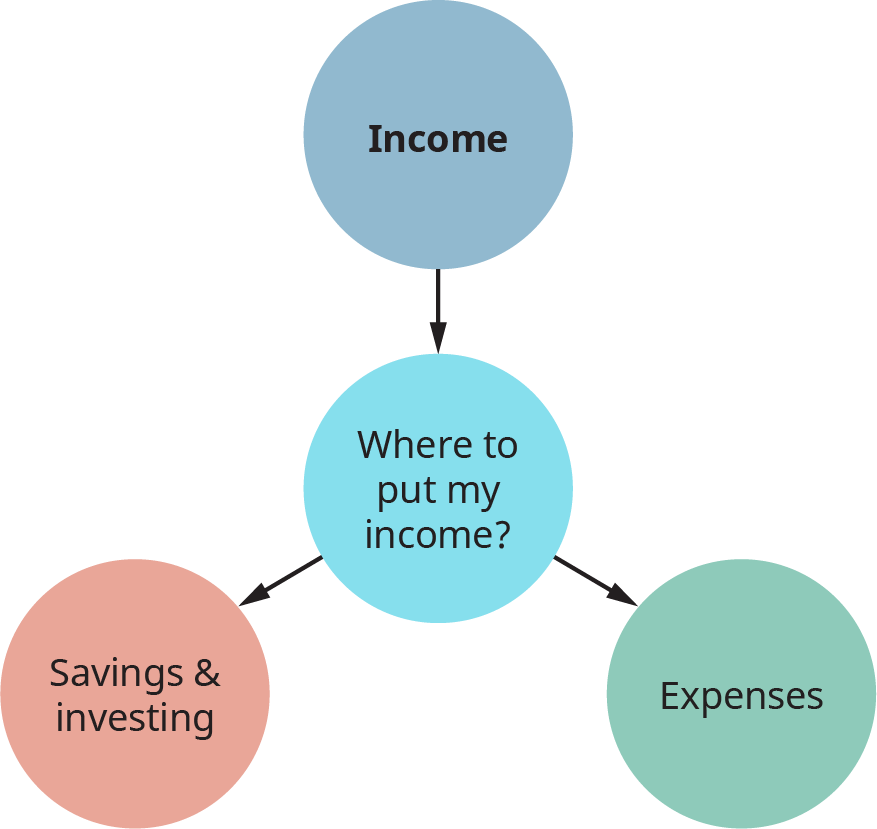

Product rationalisation is the process of reviewing the products or services a business sells and deciding which ones to keep, improve, combine, reduce, outsource, or discontinue. For Kenyan SMEs, this can be one of the most practical ways to improve profitability without relying entirely on finding more customers.
Many businesses assume growth means adding more products, serving more customer segments and accepting every possible order. Over time, however, a business can accumulate slow-moving products, complicated service lines, low-margin customers and activities that consume disproportionate amounts of management time.
The result can be a business that looks busy but does not generate enough profit or cash.
Product rationalisation provides a structured way to ask a difficult but important question: What should the business stop doing?
The answer should not be based simply on which product has the lowest sales. A product with modest revenue may generate excellent margins, while a high-revenue product may absorb working capital, require excessive support and generate very little contribution.
For Kenyan business owners, product rationalisation should therefore connect sales data with gross margin, contribution margin, inventory, working capital, customer profitability, operational complexity and strategic importance.
It is also closely connected to customer rationalisation. A business may discover that certain customers are not profitable once discounts, delivery costs, credit periods, returns, special requests and administrative effort are considered.
This article explains how Kenyan SMEs can approach product rationalisation systematically and make better decisions about products, services, customers and resources.
What Is Product Rationalisation?
Product rationalisation is a structured review of a company’s products or services to determine which should be retained, improved, consolidated, reduced or discontinued. The objective is not simply to reduce the product range; it is to allocate capital, people, inventory and management attention toward activities that create sustainable value.
Product rationalisation is sometimes confused with cutting products.
That is too narrow.
A proper product rationalisation exercise evaluates the entire product portfolio and identifies the role each product plays in the business.
A product may be:
- highly profitable and strategically important;
- profitable but operationally difficult;
- a low-margin product that attracts valuable customers;
- a complementary product that increases the value of other sales;
- a seasonal product;
- a slow-moving product consuming inventory;
- a product with strong revenue but weak contribution;
- a product that creates excessive warranty or support costs;
- a product that no longer fits the company’s strategy; or
- a product that should be discontinued.
The same principle applies to services.
For example, a Kenyan professional-services firm may offer ten different services because clients occasionally request them. However, two or three services might generate most of the firm’s profit while the remaining services consume specialist staff time without producing adequate returns.
Product rationalisation helps management see that distinction.
It is therefore a profitability and resource-allocation exercise, not merely an inventory exercise.
Businesses can combine product rationalisation with financial modelling at financial-modelling-kenya to understand how different product decisions could affect revenue, margins, working capital and cash flow.
Why Kenyan SMEs Need Product Rationalisation
A larger product range does not automatically mean a stronger business. Product rationalisation can help Kenyan SMEs identify where inventory, staff time, working capital and management attention are being consumed without producing an adequate return.
Kenyan businesses often expand their product ranges for understandable reasons.
A customer asks for another product.
A supplier offers an attractive deal.
A competitor introduces something new.
A salesperson believes a wider catalogue will increase sales.
A business owner decides to “have something for everyone.”
Individually, these decisions can appear sensible. Collectively, they can create a difficult operating model.
Consider a wholesaler carrying 500 SKUs. If 50 products account for most of its contribution but the remaining 450 require storage, purchasing, stock counts, working capital and occasional discounting, the cost of maintaining the wider range may be significant.
The same problem can occur in manufacturing, retail, hospitality, professional services, distribution and e-commerce.
Product rationalisation becomes particularly important when a business experiences:
- declining margins;
- excess inventory;
- slow-moving stock;
- frequent stock-outs of important products;
- rising warehouse costs;
- increasing customer-service complexity;
- too many suppliers;
- excessive product variations;
- declining cash reserves;
- rising operating expenses;
- weak return on working capital; or
- management overload.
Before deciding what to discontinue, however, management needs reliable financial information.
If bookkeeping records do not clearly show sales, direct costs, expenses and receivables, product rationalisation can become guesswork. Businesses can strengthen the underlying records through bookkeeping-services.
Start With Product-Level Profitability
Revenue is not the same as profitability. A product rationalisation analysis should examine contribution and the resources consumed by each product rather than ranking products by sales alone.
The first step is to build a product-level profitability analysis.
For every significant product or service, management should collect information such as:
| Metric | What it tells management |
|---|---|
| Revenue | How much the product sells |
| Units sold | Volume and demand |
| Direct cost | Cost directly associated with delivery |
| Gross margin | Profit after direct product costs |
| Contribution margin | Amount available to cover fixed costs and profit |
| Discounts | How much selling price is being sacrificed |
| Returns | Potential quality or customer-fit problems |
| Inventory days | How long stock remains before sale |
| Working capital | Capital tied up in the product |
| Support cost | Service burden created by the product |
| Delivery cost | Distribution economics |
| Credit period | Cash-flow implications |
| Warranty/after-sales cost | Hidden cost of the product |
This produces a more useful picture than sales revenue alone.
Suppose Product A generates KSh 20 million in annual revenue at a 10% contribution margin.
Product B generates KSh 8 million at a 35% contribution margin.
Product A produces more revenue, but Product B may generate significantly more contribution.
The correct product rationalisation decision requires more information than those figures alone, but the example demonstrates why revenue ranking can be misleading.
This is also where the principles discussed in unit-economics-explained-kenya become relevant.
Product Rationalisation Should Examine Contribution Margin
Contribution margin shows how much remains from a sale after variable costs are deducted. For product rationalisation, it is often more useful than revenue because it shows which products actually contribute toward fixed costs and profit.
Contribution margin can be expressed as:
Contribution Margin = Sales Revenue − Variable Costs
For example, assume a Kenyan business sells a product for KSh 10,000.
Its variable costs include:
- materials: KSh 5,000;
- packaging: KSh 500;
- transaction charges: KSh 200;
- delivery directly attributable to the sale: KSh 800.
Total variable cost is KSh 6,500.
Contribution is therefore:
KSh 10,000 − KSh 6,500 = KSh 3,500
The contribution margin percentage is:
KSh 3,500 ÷ KSh 10,000 × 100 = 35%
A product with a 35% contribution margin may deserve attention even if its revenue is not the highest.
However, management should go further.
A product can have an attractive contribution margin and still create problems because it requires large inventory investments, specialist employees, unusually long customer credit or substantial after-sales support.
That is why product rationalisation needs a broader framework.
Review the Fixed and Variable Cost Structure
Products should be assessed against the cost structure they create, not only against their selling price. Understanding fixed and variable costs helps management determine whether discontinuing a product would actually reduce costs or merely transfer them elsewhere in the business.
This distinction is critical.
Suppose a company stops selling a product that generates KSh 5 million in annual revenue.
Management might expect the business to save all costs associated with that product.
But perhaps only KSh 1 million of its costs are genuinely variable.
The warehouse lease remains.
The permanent employee remains.
The accounting system remains.
The office remains.
The management salaries remain.
If the business stops selling the product, the KSh 4 million of fixed costs may still exist.
This means discontinuing the product could reduce revenue without producing an equivalent reduction in expenses.
That is why product rationalisation must identify avoidable costs.
The analysis should distinguish between:
Variable costs — costs that change with sales volume.
Fixed costs — costs that remain broadly unchanged within a relevant operating range.
Semi-variable costs — costs containing both fixed and variable components.
Step costs — costs that remain fixed until activity reaches a certain level and then increase.
This framework should be considered alongside the principles explained in fixed-vs-variable-costs.
Do Not Automatically Eliminate Low-Sales Products
A low-sales product is not automatically a bad product. Before discontinuing it, determine whether it generates attractive margins, supports other products, attracts valuable customers or serves an important strategic purpose.
One of the biggest product rationalisation mistakes is using sales volume as the main elimination criterion.
A product with low sales could still be valuable.
For example, a specialised spare part might sell only occasionally but generate high margins.
A particular service might be purchased infrequently but introduce customers to several higher-value services.
A product might also prevent customers from moving to a competitor who offers a complete range.
Therefore, management should ask:
Why does this product exist?
Possible answers include:
- It generates direct profit.
- It attracts customers.
- It supports other products.
- It improves customer retention.
- It completes the product range.
- It serves an important customer segment.
- It protects a strategic relationship.
- It creates future cross-selling opportunities.
- It is required for contractual reasons.
- It is genuinely no longer useful.
Product rationalisation should therefore identify the economic and strategic role of each product.
Identify Products That Consume Too Much Working Capital
A profitable product can still create cash-flow problems if it ties up too much working capital. Product rationalisation should therefore consider inventory turnover, supplier terms, customer credit and the amount of cash required to keep each product available.
Working capital is often overlooked during product portfolio reviews.
Imagine two products produce similar annual contribution.
Product A turns over every 20 days.
Product B remains in inventory for 180 days.
If Product B requires substantial stock to maintain availability, it may consume significantly more cash.
This matters for Kenyan SMEs because working capital can be one of the biggest constraints on growth.
A company may report accounting profits while struggling to pay suppliers, employees or tax obligations because too much cash is tied up in inventory and receivables.
Management should therefore examine:
- inventory turnover;
- days inventory outstanding;
- supplier payment terms;
- customer payment terms;
- minimum order quantities;
- safety-stock requirements;
- obsolete stock;
- damaged stock;
- imported inventory lead times; and
- foreign-currency exposure where relevant.
Businesses can also use a dedicated working capital forecast through working-capital-forecast-sme to understand the cash implications of portfolio decisions.
Product Rationalisation and Customer Rationalisation Are Connected
A product may appear unprofitable because of the customer segment that buys it, while a customer may appear valuable because revenue is measured without considering service and collection costs. Product and customer rationalisation should therefore be analysed together.
Product rationalisation answers:
Which products should we continue selling?
Customer rationalisation asks:
Which customers are economically and strategically worth serving under our current terms?
The two questions overlap.
Consider a customer who buys KSh 10 million of products annually.
At first glance, that customer appears highly valuable.
But suppose the customer:
- receives a 15% discount;
- demands frequent deliveries;
- purchases small quantities;
- pays after 90 days;
- frequently returns products;
- requires extensive account management; and
- negotiates special terms.
The headline revenue may conceal a much smaller economic contribution.
Another customer may buy only KSh 4 million but:
- pays promptly;
- accepts standard pricing;
- orders efficiently;
- requires little support;
- purchases high-margin products; and
- has predictable demand.
Customer rationalisation does not necessarily mean firing customers.
It may mean changing the commercial relationship.
Possible actions include:
- revising prices;
- changing minimum order quantities;
- reducing discounts;
- changing delivery terms;
- shortening payment periods;
- introducing service fees;
- moving customers to standard products; or
- discontinuing accounts that consistently destroy value.
Build a Product Portfolio Matrix
A product portfolio matrix makes product rationalisation easier because it forces management to consider multiple dimensions instead of one sales figure. At minimum, compare profitability, growth potential, strategic importance and operational complexity.
A practical product rationalisation matrix can classify products into four broad groups.
Core Products
These products have strong demand and attractive economics.
The objective is usually to protect availability, improve efficiency and invest appropriately.
Growth Products
These may not yet produce the highest contribution but show attractive market potential.
The business may need to invest in marketing, distribution, capacity or pricing optimisation.
Support Products
These may have modest direct profitability but serve an important strategic purpose.
They should not automatically be eliminated.
Management should determine whether the support role justifies the resources consumed.
Rationalisation Candidates
These products may have:
- low contribution;
- declining demand;
- high inventory requirements;
- excessive complexity;
- high return rates;
- high support costs;
- weak strategic relevance; or
- poor cash conversion.
These products deserve deeper review.
The purpose of this matrix is not to create an automatic “keep or kill” decision. It is to create a disciplined process for determining what happens next.
Look at Product Complexity, Not Just Product Profit
Complexity has a cost even when it does not appear as a separate line in the income statement. A product requiring special procurement, storage, packaging, delivery, training or support may be less attractive than its gross margin suggests.
Every additional product can create operational complexity.
For example, adding one new SKU might require:
- another supplier;
- another purchase order;
- another inventory record;
- another storage location;
- another price;
- another sales code;
- another catalogue entry;
- additional training;
- additional quality checks;
- additional marketing;
- additional customer support.
Multiply this across hundreds of products and the complexity becomes significant.
Product rationalisation should therefore ask:
How much organisational effort does this product require?
A product with modest revenue and high operational complexity may deserve review even if its gross margin appears acceptable.
This is especially relevant for businesses with large catalogues and multiple branches.
Use a Product Rationalisation Decision Scorecard
A structured scorecard can reduce emotional decision-making during product rationalisation. The scorecard should combine financial, operational, customer and strategic information rather than relying on management preference alone.
A practical scorecard might assess each product against:
| Factor | Key question |
|---|---|
| Revenue | Is demand significant? |
| Contribution | Does the product contribute enough? |
| Margin trend | Is profitability improving or deteriorating? |
| Inventory | How much cash is tied up? |
| Complexity | How difficult is it to manage? |
| Customer value | Does it support valuable customers? |
| Growth | Does demand have potential to increase? |
| Strategic fit | Does it support the company’s direction? |
| Working capital | How quickly does cash return? |
| Risk | Does it create regulatory, quality or supply risk? |
| Substitution | Can customers easily find alternatives? |
| Cross-selling | Does it generate other profitable sales? |
The objective is not to create a rigid mathematical score that automatically decides what management should do.
Instead, it creates a consistent basis for discussion.
A business can then classify each product as:
Keep
Improve
Reprice
Bundle
Consolidate
Outsource
Reduce inventory
Test again
Discontinue
Consider Repricing Before Discontinuing
Some products should not be discontinued until pricing has been tested. If a product is strategically useful but commercially underpriced, correcting its price, discount structure or minimum order size may restore its economics.
Product rationalisation and pricing strategy should be connected.
A product can appear unprofitable simply because its price does not reflect:
- inflation;
- delivery costs;
- financing costs;
- imported input costs;
- currency movements;
- staff time;
- warranty obligations;
- overhead allocation; or
- customer-specific service requirements.
Before eliminating a product, management should ask:
Could the economics be fixed through pricing?
Possible interventions include:
- increasing the selling price;
- reducing discounts;
- introducing minimum order quantities;
- charging separately for delivery;
- introducing premium versions;
- reducing costly customisation;
- bundling products;
- changing payment terms; or
- moving customers to a different service package.
The broader pricing principles can be reviewed at pricing-strategy-sme-kenya.
Know When to Bundle Products
Not every weak product needs to disappear; some products can become more commercially useful when bundled with stronger products or services. Bundling can reduce complexity while preserving customer value and increasing the economics of the overall transaction.
Suppose a company sells Products A, B and C.
Product C has low standalone profitability but is frequently purchased alongside Product A.
Eliminating Product C could make Product A less attractive.
Instead, the company might create:
Product A + Product C = bundled solution
The bundle may produce better overall economics.
The same principle applies to services.
A professional firm may combine several related services into a package rather than selling each one independently.
The product rationalisation question therefore becomes:
Can this product be commercially redesigned before it is discontinued?
Review Customers by Profitability, Not Revenue
Customer rationalisation should examine the actual cost of serving each customer, not just annual sales. High-revenue customers can require substantial discounts, working capital and support, while smaller customers may generate stronger contribution.
A customer profitability analysis should consider:
Customer Revenue − Product/Service Costs − Cost to Serve − Financing/Collection Costs = Approximate Customer Contribution
Cost to serve may include:
- delivery;
- returns;
- customer service;
- account management;
- technical support;
- special packaging;
- discounts;
- credit administration;
- collections;
- bad-debt exposure;
- customisation; and
- frequent order changes.
This can reveal surprising results.
The exercise should not be used to label customers as “good” or “bad.” Instead, it should help management determine whether commercial terms reflect the resources required to serve each account.
Some customer relationships can be improved through revised terms rather than terminated.
Avoid the Sunk-Cost Trap
Past investment should not determine whether a product remains viable. Management should focus on future cash flows, avoidable costs, strategic value and realistic demand rather than continuing a product simply because money has already been spent on it.
Businesses sometimes continue weak products because they have already invested heavily in:
- branding;
- equipment;
- packaging;
- inventory;
- training;
- marketing;
- product development; or
- distribution.
That investment is a sunk cost if it cannot be recovered.
The better question is:
What will happen from today onward if we continue this product compared with changing or discontinuing it?
This forward-looking approach is particularly important during product rationalisation.
Test Before You Fully Discontinue
A controlled test can reduce the risk of making an irreversible product rationalisation decision too quickly. Where uncertainty is high, reduce stock, restrict new purchases, change pricing or serve selected customers before making a final decision.
A business does not always need to move immediately from “full availability” to “zero availability.”
It can create an intermediate stage.
For example:
Stage 1: Stop expanding inventory.
Stage 2: Sell existing stock.
Stage 3: Test revised pricing.
Stage 4: Stop promotional spending.
Stage 5: Inform selected customers.
Stage 6: Monitor replacement-product demand.
Stage 7: Make the final portfolio decision.
This approach can provide useful evidence.
It also prevents management from creating unnecessary disruption when the underlying problem could be solved through pricing, bundling or inventory changes.
What Happens to the Resources You Free Up?
Product rationalisation only creates meaningful value when the resources released are redeployed effectively. Cash, staff capacity, warehouse space and management time should have a clear destination after a product or customer is reduced or discontinued.
This is one of the most important questions in the process.
Suppose a business discontinues five products and releases:
- KSh 2 million of inventory;
- 200 square metres of warehouse capacity;
- 20 staff hours per week;
- procurement capacity;
- management time.
What happens next?
The business should have a plan.
Resources could be redirected toward:
- higher-margin products;
- faster-moving inventory;
- sales and marketing;
- customer retention;
- technology;
- debt reduction;
- working-capital improvement;
- new market development; or
- strategic investments.
Without redeployment, product rationalisation may simply make the business smaller rather than more efficient.
Product Rationalisation and Business Expansion
A business should understand its existing product economics before expanding into new branches or markets. Expanding an inefficient product portfolio can multiply complexity and working-capital requirements rather than solve the underlying profitability problem.
This is particularly important when a Kenyan SME is considering a second branch or regional expansion.
If the existing business already carries too many low-performing products, opening another location may duplicate:
- inventory;
- staff;
- storage;
- administration;
- delivery requirements;
- product complexity; and
- working-capital needs.
Before making an expansion decision, management can review the framework at https://adamjeeauditors.com/business-expansion-decision-kenya/.
Product rationalisation can therefore be a prerequisite to sustainable expansion.
A simpler portfolio may make it easier to:
- forecast demand;
- standardise purchasing;
- train employees;
- manage inventory;
- negotiate with suppliers;
- maintain consistent pricing; and
- replicate the operating model across branches.
How Often Should Kenyan SMEs Conduct Product Rationalisation?
Product rationalisation should be treated as a recurring management process rather than a once-in-a-decade restructuring exercise. The frequency should depend on the speed of change in the company’s products, customers, costs and market.
A business with a rapidly changing product portfolio may need monthly or quarterly reviews.
A more stable business might conduct a detailed review every six or twelve months.
Management should also trigger an additional review when:
- margins fall significantly;
- major supplier costs change;
- exchange rates affect imported products;
- inventory increases sharply;
- customer demand changes;
- a competitor enters the market;
- a new branch is planned;
- the company launches a major new product;
- cash flow becomes constrained; or
- a product line becomes operationally difficult.
The objective is to prevent portfolio complexity from accumulating unnoticed.
Common Product Rationalisation Mistakes
The biggest product rationalisation mistakes are usually caused by incomplete financial analysis, overreliance on revenue data and failure to consider customer or strategic value. A disciplined review should test the numbers before making irreversible decisions.
Cutting Products Based Only on Sales
Low sales do not automatically mean low value.
Ignoring Contribution Margin
Revenue can hide weak economics.
Ignoring Working Capital
A product that requires excessive inventory can create cash pressure.
Ignoring Customer Relationships
Some products may support profitable customer relationships.
Treating All Costs as Avoidable
Discontinuing a product does not automatically eliminate every cost associated with it.
Making Decisions Based on Emotion
Owners may have personal attachment to products they created or introduced.
Failing to Reprice
Some products need commercial redesign rather than elimination.
Removing Products Without Reinvestment
Resources released through rationalisation should be deliberately redeployed.
Failing to Monitor the Results
The business should measure whether rationalisation actually improved contribution, cash flow and operational efficiency.
A Practical Product Rationalisation Process for a Kenyan SME
A practical product rationalisation process should move from data collection to profitability analysis, strategic review, action and post-decision monitoring. The process should produce a clear action for every major product and customer segment.
A Kenyan SME can follow this sequence:
Step 1: List the complete portfolio
Include every significant product and service.
Step 2: Collect financial data
Gather revenue, direct costs, discounts, returns and contribution.
Step 3: Analyse working capital
Identify products tying up disproportionate amounts of cash.
Step 4: Analyse customer profitability
Determine which customers generate attractive contribution after cost to serve.
Step 5: Review operational complexity
Identify products requiring excessive procurement, storage, support or administration.
Step 6: Review strategic importance
Determine whether the product supports important customers or future growth.
Step 7: Test alternatives
Consider repricing, bundling, outsourcing, consolidation or reduced inventory.
Step 8: Decide the action
Keep, improve, reprice, bundle, consolidate, reduce or discontinue.
Step 9: Redeploy resources
Move released cash, people and capacity toward higher-value activities.
Step 10: Measure results
Track margin, cash flow, inventory, customer retention and operating efficiency.
This turns product rationalisation into an ongoing management discipline.
When Should a Business Bring in an Adviser?
External advisory support can be useful when management needs an independent review of product profitability, customer economics, cost structures or strategic alternatives. An adviser can help challenge assumptions and connect operational decisions to financial outcomes without replacing management’s decision-making role.
An adviser may be useful when:
- financial information is fragmented;
- product profitability is unclear;
- management disagrees about what to discontinue;
- the business has hundreds of SKUs;
- working capital is under pressure;
- margins are falling;
- a restructuring is being considered;
- expansion is planned;
- there are multiple shareholders; or
- the consequences of the decision are financially significant.
Adamjee Auditors provides business advisory services covering areas including financial analysis, planning and strategic decision support. Businesses can explore the wider service at business-advisory-services-kenya.
The objective of external advice should be to improve the quality of information and analysis available to management.
The final commercial decision remains with the business owners and leadership team.
Frequently Asked Questions About Product Rationalisation
What is product rationalisation?
Product rationalisation is the structured review of a company’s products or services to determine which should be retained, improved, repriced, consolidated or discontinued. It aims to improve the allocation of capital, inventory, staff capacity and management attention.
Product rationalisation considers financial performance, customer value, operational complexity, working capital and strategic relevance.
Why is product rationalisation important for Kenyan SMEs?
Product rationalisation can help Kenyan SMEs identify products and services that consume resources without generating sufficient economic returns. It can also simplify operations, improve working capital and allow management to focus on stronger parts of the business.
The exercise is particularly relevant when a company has accumulated a large product range or is experiencing margin and cash-flow pressure.
How do you identify a product that should be discontinued?
Start by analysing contribution margin, working capital, operational complexity, customer importance and strategic relevance. A product should not be discontinued solely because it has low sales.
Management should also test whether pricing, bundling or other commercial changes could improve the product’s economics.
What is customer rationalisation?
Customer rationalisation is the process of reviewing customers based on their economic contribution and strategic value rather than revenue alone. It can lead to revised pricing, service terms, minimum order requirements or, in some cases, ending a commercially unsustainable relationship.
Can product rationalisation improve cash flow?
Yes, particularly when rationalisation reduces slow-moving inventory and releases working capital. The cash benefit depends on how much inventory is released, how quickly it can be converted to cash and whether ongoing costs are actually reduced.
Should every low-margin product be discontinued?
No. A low-margin product may support profitable customers, generate cross-selling opportunities or serve an important strategic function.
The correct decision depends on the total economic and strategic contribution of the product.
Conclusion: Knowing What to Stop Can Strengthen a Business
Product rationalisation is ultimately about making better choices about where a business puts its limited resources. The objective is not to create the smallest possible product range but to build a portfolio that produces sustainable contribution, supports customers and aligns with the company’s strategy.
For Kenyan SMEs, the process should begin with reliable numbers.
Management needs to understand:
- which products generate revenue;
- which products generate contribution;
- which products consume working capital;
- which customers are genuinely profitable;
- which activities create unnecessary complexity;
- which products have strategic value; and
- where released resources can generate better returns.
The most important question is not simply:
“What should we stop selling?”
It is:
“What should we stop doing so that we can do the right things better?”
That distinction turns product rationalisation from a cost-cutting exercise into a strategic management tool.
A focused portfolio can make purchasing easier, inventory more efficient, pricing clearer, operations simpler and management attention more productive.
For businesses considering broader changes to their strategy, financial modelling, profitability or operating structure, professional business advisory support can provide an independent framework for analysing the alternatives.
Explore Adamjee Auditors’ Business Advisory services at business-advisory-services-kenya.
Gain Clarity and Confidence in Your Finances
Navigate the complexities of compliance, tax, and financial management with a trusted partner. Adamjee Auditors, a member of Santa Fe Associates International (SFAI), provides world-class audit, tax, and advisory services to help your business achieve its goals.
Schedule a consultation with our expert team in Nairobi or Mombasa to discuss your business needs.
Nairobi Office
Park View Heights, Mombasa Road, OR Mbandu Complex, Langata Road
+254 717 908 241
madamjee@adamjeeauditors.co.ke
Mombasa Office
Suite 401, Motorwalla Building, Jomo Kenyatta Road
+254 750 053 053
info@adamjeeauditors.co.ke