Understanding fixed vs variable costs is one of the most important financial skills for a Kenyan SME owner or manager. A business can have strong sales and still struggle with profitability because management does not understand which costs actually change with activity and which costs remain relatively stable.
The distinction becomes particularly important when deciding whether to hire employees, increase production, open another branch, change prices, outsource work or launch a new product.
A useful cost structure analysis should therefore go beyond simply putting expenses into two boxes.
Some costs are clearly fixed.
Some are clearly variable.
Others only look variable because they increase occasionally, in steps or within certain operating ranges.
Understanding fixed vs variable costs correctly helps management calculate contribution margins, break-even points, pricing, budgets and expansion requirements.
For broader financial planning and scenario analysis, see Adamjee Auditors’ financial modelling services:
What Are Fixed vs Variable Costs?
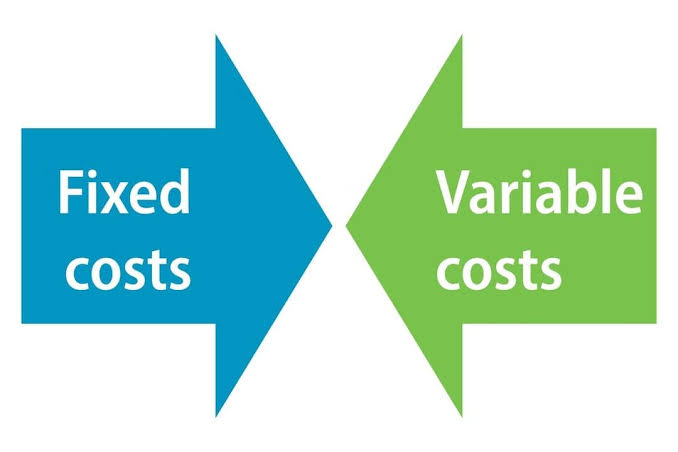
Fixed costs generally remain unchanged within a relevant operating range, while variable costs change in relation to business activity. However, the distinction depends on the time period, capacity level and cost behaviour being analysed.
In simple terms:
Fixed cost: A cost that does not change significantly when activity changes within a relevant range.
Variable cost: A cost that changes as production, sales, customers or another activity driver changes.
For example, a business may pay:
Monthly rent: KSh 100,000
Whether it serves 500 or 600 customers, the rent may remain KSh 100,000 under the existing lease.
That makes rent a relatively fixed cost in the short term.
Now consider packaging.
If each order requires KSh 50 of packaging, then:
- 1,000 orders = KSh 50,000
- 2,000 orders = KSh 100,000
- 3,000 orders = KSh 150,000
That is a variable cost.
The problem is that real businesses are rarely this simple.
Why Fixed vs Variable Costs Matter
Understanding fixed vs variable costs allows management to predict how changes in sales volume will affect profit. It also helps determine break-even sales, pricing requirements and the financial impact of expansion.
Suppose an SME has:
Revenue: KSh 2 million
Variable costs: KSh 1.2 million
Fixed costs: KSh 600,000
The contribution is:
KSh 2 million − KSh 1.2 million = KSh 800,000
Operating profit before other applicable costs is:
KSh 800,000 − KSh 600,000 = KSh 200,000
Now imagine sales increase by KSh 500,000 and the variable cost ratio remains 60%.
Additional variable costs:
KSh 500,000 × 60% = KSh 300,000
Additional contribution:
KSh 500,000 − KSh 300,000 = KSh 200,000
If fixed costs remain unchanged, operating profit can increase by approximately KSh 200,000.
This is the power of understanding fixed vs variable costs.
Common Fixed Costs for Kenyan SMEs
Fixed costs are usually costs that remain relatively stable over a defined period and operating range. However, management should always check whether a cost has stepped up because of increased capacity or activity.
Common examples include:
- office rent;
- shop rent;
- warehouse rent;
- permanent management salaries;
- insurance;
- software subscriptions;
- accounting fees;
- professional retainers;
- certain licences;
- equipment leases;
- security contracts; and
- depreciation.
However, “fixed” does not mean permanent.
A landlord may increase rent when a lease is renewed.
A company may hire additional employees when it expands.
A software provider may charge more when additional users are added.
Therefore, fixed costs should be considered within a specific time period and operating range.
Common Variable Costs
Variable costs generally rise or fall with the level of business activity. For SMEs, identifying these costs accurately is important because they determine contribution margin and the economics of additional sales.
Examples can include:
- raw materials;
- merchandise purchased for resale;
- packaging;
- transaction fees;
- sales commissions;
- delivery costs;
- production consumables;
- outsourced production;
- per-unit licensing fees; and
- certain payment-processing costs.
For example, a bakery selling an additional 1,000 loaves will generally require more flour, packaging and other production inputs.
Those costs move with volume.
The Costs That Only Look Variable
Some costs appear variable because they increase as the business grows, but they may actually be step-fixed, semi-variable or driven by another operational factor. Misclassifying these costs can distort forecasts and break-even calculations.
Consider electricity.
An SME may assume electricity is completely variable because higher production can increase power consumption.
But the business may have:
- a minimum monthly charge;
- fixed connection costs;
- demand-related charges;
- consumption-based charges.
Therefore, electricity may behave as a mixed or semi-variable cost.
Another example is delivery.
A business may pay:
- a fixed monthly amount to a logistics provider; plus
- a variable amount based on deliveries.
The total delivery cost therefore contains both fixed and variable components.
This is why fixed vs variable costs analysis needs to consider actual cost behaviour.
Semi-Variable Costs Explained
Semi-variable costs contain both fixed and variable components. Separating the two elements can make financial models and management decisions more accurate.
A simple formula is:
Total Cost = Fixed Component + Variable Component
Suppose an internet or telecommunications contract costs:
KSh 10,000 fixed monthly fee + KSh 20 per additional unit of usage.
At 1,000 units:
KSh 10,000 + KSh 20,000 = KSh 30,000
At 2,000 units:
KSh 10,000 + KSh 40,000 = KSh 50,000
The total cost changes with activity, but not all of it is variable.
This distinction matters when forecasting future costs.
Step Costs: The Costs That Change in Jumps
Step costs remain stable over a range of activity but increase when the business crosses a capacity threshold. They are neither purely fixed nor smoothly variable.
Consider staff.
One employee may be able to process 1,000 orders per month.
If orders increase from 500 to 900, salary cost may remain unchanged.
But if orders increase to 1,500, the business may need another employee.
The cost therefore behaves like this:
500 orders → 1 employee
900 orders → 1 employee
1,000 orders → 1 employee
1,500 orders → 2 employees
The cost is fixed within one capacity range but jumps when capacity is exceeded.
This is a step-fixed cost.
Other examples include:
- additional vehicles;
- warehouse space;
- supervisors;
- security guards;
- machinery;
- customer service staff; and
- additional branches.
Relevant Range Matters
A cost can be fixed within one relevant range but become variable or step-fixed when activity changes significantly. Always define the operating range before classifying a cost.
Imagine a restaurant pays KSh 150,000 monthly rent.
Within its current premises, rent is fixed.
But if sales double and the restaurant needs a larger facility, rent could increase to KSh 300,000.
It would be incorrect to assume that rent will remain fixed forever.
The relevant question is:
“Fixed over what period and at what capacity?”
This is one of the most important concepts in fixed vs variable costs analysis.
Fixed vs Variable Costs Example for a Kenyan SME
A simple cost table can help management see how costs behave as sales volume changes.
Consider a small Kenyan manufacturing business.
| Cost | Monthly Amount | Classification |
|---|---|---|
| Factory rent | KSh 200,000 | Fixed |
| Management salaries | KSh 300,000 | Fixed |
| Raw materials | KSh 700,000 | Variable |
| Packaging | KSh 80,000 | Variable |
| Sales commissions | KSh 100,000 | Variable |
| Insurance | KSh 40,000 | Fixed |
| Electricity | KSh 120,000 | Mixed |
| Delivery | KSh 100,000 | Mixed |
| Accounting retainer | KSh 30,000 | Fixed |
This classification provides a better foundation for budgeting and forecasting.
However, management should validate each classification against the actual contract and cost behaviour.
Fixed vs Variable Costs and Contribution Margin
Contribution margin shows how much revenue remains after variable costs to cover fixed costs and generate profit. It is one of the most useful measures produced by a fixed vs variable costs analysis.
The formula is:
Contribution Margin = Revenue − Variable Costs
Suppose:
Revenue = KSh 1,000,000
Variable costs = KSh 600,000
Contribution:
KSh 400,000
Contribution margin percentage:
KSh 400,000 ÷ KSh 1,000,000 × 100 = 40%
If fixed costs are KSh 300,000:
Operating contribution after fixed costs = KSh 100,000
The business can use this information to assess the impact of additional sales.
For a related discussion of contribution economics, see:
unit-economics-explained-kenya
Fixed vs Variable Costs and Break-Even Analysis
Break-even analysis depends heavily on correctly separating fixed and variable costs. If variable costs are understated, the business may overestimate profitability and underestimate the sales required to break even.
The formula is:
Break-Even Sales = Fixed Costs ÷ Contribution Margin Ratio
Suppose:
Fixed costs = KSh 500,000
Contribution margin = 40%
Break-even sales:
KSh 500,000 ÷ 40% = KSh 1,250,000
The business needs approximately KSh 1.25 million in sales to cover its fixed costs under these assumptions.
This calculation can be used when assessing:
- new products;
- price changes;
- additional employees;
- new branches;
- equipment purchases;
- marketing campaigns; and
- expansion.
How Misclassifying Costs Can Damage a Business
Incorrect cost classification can lead management to make poor pricing, hiring, expansion and budgeting decisions. The biggest risk is not the accounting label itself but the incorrect business decision that follows.
Suppose management incorrectly treats KSh 200,000 of variable costs as fixed.
The model may show a higher contribution margin than the business actually earns.
Management might then conclude:
“We can afford to reduce our price.”
But once sales increase, those costs rise.
The expected profit may disappear.
The opposite can also happen.
If a genuinely fixed cost is treated as variable, management may underestimate the contribution generated by additional sales.
That could cause the business to reject a profitable growth opportunity.
Fixed vs Variable Costs When Setting Prices
Pricing decisions should consider both variable costs and the fixed costs the business needs to recover. A price below variable cost may destroy value on every additional sale, while a price above variable cost may still be insufficient to cover total overhead.
Consider a service priced at:
KSh 10,000
Variable cost:
KSh 6,000
Contribution:
KSh 4,000
If the business has KSh 800,000 in monthly fixed costs, it needs:
KSh 800,000 ÷ KSh 4,000 = 200 units
to cover fixed costs.
If management reduces the price to KSh 8,500 while variable costs remain KSh 6,000:
New contribution:
KSh 2,500
The business now requires:
KSh 800,000 ÷ KSh 2,500 = 320 units
The 15% price reduction therefore requires 60% more units to achieve the same fixed-cost coverage.
This is why pricing should be linked to cost structure.
For a deeper look at SME pricing, see:
Fixed vs Variable Costs When Hiring Employees
Employee costs can be fixed, variable or step-fixed depending on how staff are paid and how staffing levels respond to workload.
A permanent monthly salary is generally fixed over the relevant period.
A commission based on sales is variable.
An employee receiving a base salary plus commission has both fixed and variable components.
Temporary labour paid according to hours worked may behave more like a variable cost.
A business should therefore analyse employee costs based on the actual compensation structure.
This matters when deciding whether to:
- hire permanently;
- outsource;
- use contractors;
- introduce commissions; or
- automate a process.
Fixed vs Variable Costs When Opening a Second Branch
Expansion increases both fixed and variable costs. Management should model the new branch separately rather than assuming that the first branch’s cost structure will simply scale proportionally.
A second branch could introduce fixed costs such as:
- rent;
- branch manager salary;
- security;
- insurance;
- software;
- utilities minimums.
Variable costs could include:
- stock;
- packaging;
- transaction fees;
- delivery;
- sales commissions.
Step costs may include:
- additional supervisors;
- warehouse capacity;
- vehicles;
- administrative staff.
For a full framework on deciding whether to expand, see:
business-expansion-decision-kenya
The branch model should show how costs behave at different sales volumes.
Fixed vs Variable Costs and Financial Forecasting
A reliable forecast needs cost assumptions that reflect how expenses actually behave. Simply increasing every expense by the same percentage can produce misleading results.
Suppose sales are expected to increase by 20%.
It would be incorrect to automatically increase:
- rent by 20%;
- insurance by 20%;
- management salaries by 20%;
- raw materials by 20%;
- commissions by 20%.
Some costs may remain unchanged.
Others may increase directly with sales.
Some may increase only after the business reaches a new capacity threshold.
A better forecast separates the cost drivers.
This is one reason fixed vs variable costs should be incorporated into the budgeting process.
Cost Drivers Are More Important Than Accounting Labels
The best way to understand cost behaviour is to identify what actually causes the cost to change. The cost driver may be units produced, customers served, kilometres travelled, employees, transactions or another operational measure.
Examples include:
Raw materials → units produced
Sales commissions → sales value
Delivery fuel → kilometres or deliveries
Customer support → number of customers or tickets
Packaging → orders
Warehouse labour → inventory volume
Bank transaction fees → transaction value
Once the cost driver is identified, forecasting becomes more reliable.
For example, if delivery costs are driven by kilometres rather than revenue, increasing sales does not necessarily mean delivery costs will rise proportionally.
The actual delivery pattern matters.
How to Analyse Your SME’s Cost Structure
SMEs should periodically review their cost structure rather than relying on historical classifications. Contracts, staffing models, supplier arrangements and business activity can change how costs behave.
A practical review can follow these steps.
Identify Every Major Cost
Start with the income statement and expense records.
List significant expenses individually.
Identify the Cost Driver
Ask what causes each cost to increase or decrease.
Determine the Relevant Period
A cost may be fixed monthly but variable annually.
Check for Mixed Costs
Look for costs containing fixed and variable components.
Identify Step Costs
Determine whether the cost jumps after a capacity threshold.
Test Against Historical Data
Compare cost changes with changes in sales, production or another relevant activity measure.
Update the Financial Model
Use the resulting assumptions in budgets and forecasts.
This approach produces a more useful management view of costs.
Fixed vs Variable Costs and Cash Flow
Cost classification affects cash-flow forecasting because variable costs can increase quickly as sales grow, while fixed costs may create large commitments that remain payable even during slow periods.
Suppose an SME increases inventory because management expects sales to grow.
If sales do not materialise, the business may have:
- more stock;
- supplier obligations;
- additional storage costs;
- financing costs; and
- weaker cash flow.
Likewise, signing a long-term lease creates a fixed commitment that may continue even if sales decline.
This is why cost structure should be considered alongside working capital.
A useful related resource is:
Fixed vs Variable Costs and Business Risk
Businesses with high fixed costs can experience stronger profit growth when sales increase but can also experience greater pressure when sales fall. Businesses with more variable costs may have greater flexibility but can also have lower contribution margins.
Consider two businesses.
Business A
High fixed costs, high contribution margin.
Business B
Lower fixed costs, lower contribution margin.
When sales rise significantly, Business A may generate more incremental profit.
But when sales fall, Business A still has substantial fixed obligations.
Business B may experience a smaller decline because more of its costs move with activity.
Neither model is automatically better.
The appropriate structure depends on:
- industry;
- demand stability;
- capital requirements;
- financing;
- capacity;
- growth objectives; and
- management’s risk tolerance.
How Cost Structure Affects Investment Decisions
Before purchasing equipment or making a major investment, management should understand how the investment changes the company’s fixed and variable cost structure.
Suppose a business currently outsources production.
The cost is largely variable.
Management considers buying machinery.
The purchase may create:
- depreciation;
- maintenance;
- insurance;
- financing payments;
- specialised labour;
- electricity costs.
Some of these costs become fixed or semi-fixed.
The investment may reduce the variable cost per unit.
The decision should therefore compare the two cost structures at different production volumes.
At low volume, outsourcing may be cheaper.
At high volume, owning equipment may become more economical.
This is a classic cost-structure decision.
Frequently Asked Questions About Fixed vs Variable Costs
What is the difference between fixed and variable costs?
Fixed costs generally remain stable within a relevant operating range, while variable costs change as business activity changes. The exact behaviour depends on the period and activity level being analysed.
Is rent a fixed cost?
Rent is generally treated as a fixed cost in the short term when the lease amount does not change with sales or production. However, rent can increase when a lease is renewed or when additional premises are required.
Are salaries fixed or variable costs?
It depends on the compensation structure. Fixed monthly salaries are generally fixed costs, while sales commissions and some production-based labour can be variable. Some compensation arrangements contain both components.
Is electricity a fixed or variable cost?
Electricity can contain both fixed and variable components. Some charges remain stable while consumption-related charges change with activity.
Why are fixed vs variable costs important?
The distinction helps management calculate contribution margin, break-even points, pricing requirements, budgets, forecasts and the financial impact of changing sales volume.
What are step-fixed costs?
Step-fixed costs remain stable within a certain operating range but increase when the business exceeds a capacity threshold, such as requiring another employee, vehicle, machine or facility.
Can a cost change from fixed to variable?
Yes. Cost behaviour depends on the relevant period and operating range. A cost may be fixed within one range but change when capacity, contracts or business activity changes.
Conclusion: Understand the Cost Before Making the Decision
The distinction between fixed vs variable costs is more than an accounting exercise.
It affects almost every major SME decision.
Before changing prices, hiring staff, purchasing equipment, launching a product or opening a second branch, management should understand:
- which costs are fixed;
- which costs are variable;
- which costs are mixed;
- which costs are step-fixed;
- what drives each cost;
- what happens when sales increase;
- what happens when sales decline; and
- how much contribution each additional sale generates.
The most important lesson is that a cost should not be classified simply because it has historically been labelled “fixed” or “variable.”
Ask instead:
What causes this cost to change?
That question produces a more useful management model.
For Kenyan SMEs, a strong understanding of fixed vs variable costs can improve pricing, budgeting, forecasting, expansion planning and profitability analysis.
Businesses that want to connect cost behaviour with broader strategic and financial decisions can also explore Adamjee Auditors’ Business Advisory Services Kenya:
business-advisory-services-kenya
Gain Clarity and Confidence in Your Finances
Navigate the complexities of compliance, tax and financial management with a trusted partner. Adamjee Auditors, a member of Santa Fe Associates International (SFAI), provides audit, tax and advisory services to help businesses make informed financial decisions.
Nairobi Office
Park View Heights, Mombasa Road, OR Mbandu Complex, Langata Road
Phone: +254 717 908 241
Email: madamjee@adamjeeauditors.co.ke
Mombasa Office
Suite 401, Motorwalla Building, Jomo Kenyatta Road
Phone: +254 750 053 053
Email: info@adamjeeauditors.co.ke
Website: https://adamjeeauditors.com/