- Working capital is calculated as current assets minus current liabilities.
- For a supermarket the current assets are cash in tills and bank accounts, inventory on shelves and in warehouses, and receivables from corporate or credit customers, while current liabilities are supplier payables, short-term loans, and utility and operational expenses.
- The cash conversion cycle is the inventory period plus the receivables period minus the payables period, and a negative or short cycle is ideal for a supermarket.
- The supermarket working capital cycle runs through five stages: purchasing inventory from suppliers, storing and stocking goods, selling to customers, receiving cash or digital payments, and reordering stock.
- Five KPIs track supermarket working capital: current ratio for ability to cover short-term liabilities, inventory turnover ratio for stock efficiency, cash conversion cycle for liquidity speed, gross margin return on inventory for stock profitability, and payables turnover for supplier payment efficiency.
- Key 2026 developments include stronger enforcement of invoice-based expense validation under eTIMS and expansion of the KRA Automated Payment Plan (APP), which eases tax settlement pressure.
Working capital management for supermarkets in Kenya is the process of managing short-term assets and liabilities to ensure smooth daily operations, consistent stock availability, and healthy cash flow.
In the retail sector, especially supermarkets, poor working capital control quickly leads to stock-outs, supplier pressure, and cash shortages even when sales appear strong.
Supermarkets operate on thin margins and high inventory turnover. This means cash is constantly moving between suppliers, shelves, and customers. Without strong financial control, even profitable supermarkets can fail due to liquidity problems.
For CEOs, CFOs, and retail business owners, working capital is not just an accounting concept—it is a survival mechanism.
Adamjee Auditors, a member of SFAI Global, provides advisory support to retail businesses across Kenya to optimize cash flow, improve supplier negotiations, and strengthen financial resilience under changing economic conditions.
What is Working Capital Management?
Working capital management for supermarkets in Kenya refers to controlling current assets (cash, inventory, receivables) and current liabilities (payables, short-term debts) to maintain liquidity.
It ensures that a business can meet its short-term obligations while continuing normal operations without cash shortages.
Working capital is calculated as:
- Current Assets – Current Liabilities
For supermarkets, current assets include:
- Cash in tills and bank accounts
- Inventory on shelves and in warehouses
- Receivables from corporate or credit customers
Current liabilities include:
- Supplier payables
- Short-term loans
- Utility and operational expenses
Efficient management ensures that cash does not remain locked in unsold stock or unpaid receivables.
For structured financial control, businesses often rely on:
Why Working Capital Management is Critical for Supermarkets in Kenya
Working capital management for supermarkets in Kenya is critical because retail businesses depend on fast inventory turnover and continuous cash circulation.
Any disruption in cash flow immediately affects stock availability and customer experience.
Supermarkets face unique financial pressures:
- High daily operational expenses
- Constant inventory replenishment
- Supplier credit dependencies
- Price fluctuations in FMCG goods
A poorly managed working capital cycle leads to:
- Empty shelves
- Delayed supplier payments
- Loss of customer trust
- Reduced profitability
Retailers must balance liquidity and stock availability at all times.
To strengthen financial governance, businesses can integrate:
Working Capital Cycle in Retail Supermarkets in Kenya
Working capital management for supermarkets in Kenya depends on the speed of the cash conversion cycle—from purchasing inventory to collecting cash from sales.
The shorter the cycle, the healthier the supermarket’s liquidity position.
The supermarket working capital cycle includes:
- Purchasing inventory from suppliers
- Storing and stocking goods
- Selling goods to customers
- Receiving cash or digital payments
- Reordering stock
The goal is to ensure:
- Fast inventory turnover
- Minimal idle stock
- Quick cash recovery
Cash Conversion Cycle Formula
Inventory Period + Receivables Period – Payables Period
A negative or short cycle is ideal for supermarkets.
In 2026, digital payment systems and supplier integration models in Kenya are shortening retail cash cycles. However, inflationary pressure and delayed supplier settlements can still distort liquidity if not actively managed through financial planning systems.
Key Components of Working Capital in Supermarkets
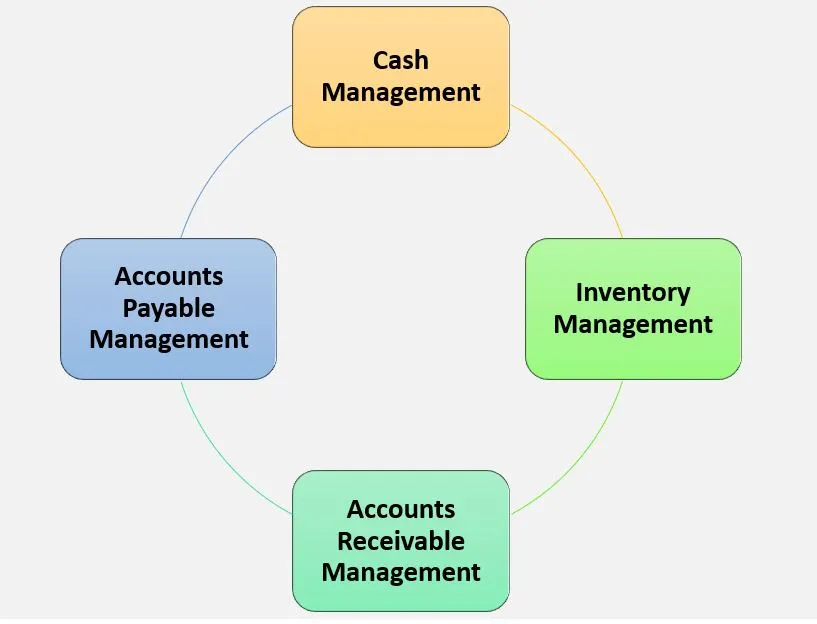
Working capital management for supermarkets in Kenya depends on balancing inventory, receivables, and payables efficiently.
Each component directly affects liquidity and operational stability.
1. Inventory Management
Inventory is the largest working capital component in supermarkets.
Issues include:
- Overstocking slow-moving goods
- Stock expiry and wastage
- Seasonal demand fluctuations
2. Accounts Receivable
Some supermarkets offer credit to institutions or bulk buyers.
Risks include:
- Delayed payments
- Bad debts
- Cash flow strain
3. Accounts Payable
This includes supplier credit terms.
Challenges:
- Strict supplier repayment deadlines
- Loss of credit privileges if delayed
- Pressure on cash reserves
For better control systems:
Cash Flow Challenges Facing Supermarkets in Kenya
Working capital management for supermarkets in Kenya is often strained by inflation, supplier credit restrictions, and unpredictable consumer demand.
These challenges directly affect liquidity and operational efficiency.
1. Inflation and Price Volatility
Food and FMCG prices fluctuate frequently, impacting inventory costs.
2. Supplier Credit Pressure
Suppliers may reduce credit terms due to payment delays.
3. High Operating Costs
Rent, wages, and utilities consume significant cash flow.
4. Seasonal Demand Variability
Sales peaks and drops affect stock planning.
5. Weak Financial Systems
Poor bookkeeping leads to inaccurate decision-making.
For risk mitigation:
Strategies to Improve Working Capital Management
Working capital management for supermarkets in Kenya can be significantly improved through inventory optimization, supplier negotiation, and cash flow forecasting.
The goal is to free up cash while maintaining product availability.
1. Optimize Inventory Levels
Avoid overstocking slow-moving items and implement demand forecasting.
2. Negotiate Supplier Credit Terms
Extend payment periods where possible without damaging supplier relationships.
3. Improve Cash Flow Forecasting
Use monthly and weekly forecasting models.
4. Strengthen Point-of-Sale Systems
Real-time sales tracking improves decision-making.
5. Reduce Stock Waste
Implement FIFO (First In First Out) inventory systems.
With increasing digitization in Kenya’s retail sector, supermarkets adopting integrated POS and accounting systems are better positioned to manage liquidity. AI-based forecasting tools are becoming essential for competitive survival.
Key KPIs for Working Capital Management
Working capital management for supermarkets in Kenya should be tracked using clear financial KPIs that measure liquidity, efficiency, and turnover.
These indicators help CFOs make informed operational decisions.
| KPI | Purpose |
|---|---|
| Current Ratio | Measures ability to cover short-term liabilities |
| Inventory Turnover Ratio | Measures stock efficiency |
| Cash Conversion Cycle | Measures liquidity speed |
| Gross Margin Return on Inventory | Measures profitability of stock |
| Payables Turnover | Measures supplier payment efficiency |
For improved governance:
2026 Retail Financial Environment
Working capital management for supermarkets in Kenya is becoming more data-driven due to regulatory digitization and financial transparency requirements in 2026.
Retailers must integrate financial systems with operational systems for real-time visibility.
Key 2026 developments impacting supermarkets:
- Increased financial digitization across retail supply chains
- Stronger enforcement of invoice-based expense validation under eTIMS
- Greater reliance on automated financial reporting systems
- Expansion of KRA Automated Payment Plan (APP) easing tax settlement pressure
These changes require supermarkets to maintain accurate and timely financial records.
For compliance readiness:
Conclusion
Working capital management for supermarkets in Kenya is a core driver of financial stability and operational success. It ensures that inventory, cash, and supplier obligations are balanced effectively to maintain uninterrupted business operations.
Supermarkets that fail to manage working capital efficiently often experience cash shortages despite strong sales performance. In contrast, well-managed businesses maintain liquidity, negotiate better supplier terms, and scale sustainably.
In Kenya’s evolving 2026 financial environment, driven by digitization and regulatory oversight, working capital discipline is no longer optional—it is essential.
Gain Clarity and Confidence in Your Finances Navigate the complexities of compliance, tax, and financial management with a trusted partner. Adamjee Auditors, a member of Santa Fe Associates International (SFAI), provides world-class audit, tax, and advisory services to help your business achieve its goals.
Schedule a consultation with our expert team in Nairobi or Mombasa to discuss your business needs.
Nairobi Office
1st Floor, Le’Mac Building, Church Road, off Waiyaki Way, Westlands
+254 717 908 241
madamjee@adamjeeauditors.co.ke
Mombasa Office
Suite 401, Motorwalla Building, Jomo Kenyatta Road
+254 750 053 053