For a Kenyan SME that has established a profitable domestic business, entering another East African market can create a new source of revenue, customers and long-term growth. But expanding to Uganda Tanzania business markets requires more than identifying a city and opening an office.
A cross-border expansion introduces new questions around demand, pricing, taxes, regulations, staffing, currency, logistics, working capital and management control.
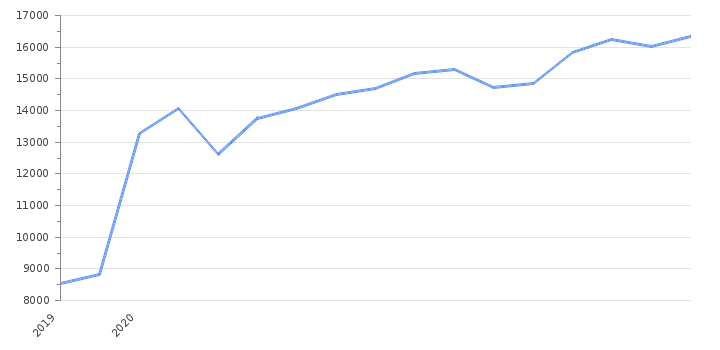
The East African Community (EAC) continues to promote regional integration and intra-EAC trade. In 2026, the EAC reported that intra-EAC exports increased by 33.2% in the second quarter compared with the same quarter of 2025, while the Community continues working to reduce trade and border bottlenecks.
For a Kenyan SME considering expanding to Uganda Tanzania business markets, however, regional integration does not remove the need for country-specific planning.
The right question is not simply:
“Which market should we enter?”
It is:
“Which market can our business serve profitably, compliantly and sustainably, and what entry model gives us enough evidence before we commit significant capital?”
Why Kenyan SMEs Consider Uganda and Tanzania
Uganda and Tanzania can form part of a logical regional expansion strategy for a Kenyan business, but the opportunity should be assessed using customer demand, competitive conditions, operating costs, regulation and expected returns rather than geographic proximity alone.
Kenyan businesses may consider regional expansion because their existing market has:
- limited growth capacity;
- strong domestic competition;
- customers requesting cross-border service;
- excess production capacity;
- established regional distribution relationships;
- transferable technology or expertise;
- a product that can serve a larger market; or
- an opportunity to participate in regional supply chains.
The EAC has identified Uganda, Kenya and Tanzania among the leading contributors to intra-EAC trade, while its current strategy continues to emphasise deeper regional economic integration.
For an SME, however, a larger addressable market does not automatically mean a profitable market.
A business needs to establish whether customers in the target country are willing to pay enough to cover the additional costs of serving them.
Uganda vs Tanzania: Start With the Business Case
Do not choose a target country based solely on size or proximity. Compare Uganda and Tanzania using the specific economics of your product, service, customer segment, logistics model and regulatory requirements.
A Kenyan company evaluating expanding to Uganda Tanzania business opportunities should build a side-by-side comparison.
Consider:
| Factor | Uganda | Tanzania |
|---|---|---|
| Target customer demand | Validate by sector | Validate by sector |
| Competition | Research locally | Research locally |
| Logistics | Model route and delivery costs | Model route and delivery costs |
| Local operating costs | Build country-specific budget | Build country-specific budget |
| Tax obligations | Confirm locally | Confirm locally |
| Staffing | Assess local requirements | Assess local requirements |
| Currency exposure | Model UGX/KES impact | Model TZS/KES impact |
| Market-entry structure | Assess options | Assess options |
| Working capital | Build country forecast | Build country forecast |
| Regulatory requirements | Verify before entry | Verify before entry |
The comparison should be based on the actual business model.
A professional-services firm may prioritise licensing, local partnerships and talent.
A manufacturer may prioritise logistics, duties, distribution and production costs.
A retailer may prioritise location, purchasing power, competition and inventory.
Validate Demand Before Registering a Company
Market validation should happen before significant fixed investment. A Kenyan SME should establish that real customers exist and understand their needs before committing to a permanent foreign operation.
One common expansion mistake is:
Register company → rent office → hire staff → search for customers.
A lower-risk approach can be:
Research → test demand → identify customers → validate pricing → model economics → choose entry structure → invest.
Market validation can include:
- interviews with prospective customers;
- distributor discussions;
- industry events;
- digital lead generation;
- pilot sales;
- sample orders;
- strategic partnerships;
- existing customer referrals;
- competitor research; and
- test marketing.
The objective is to move from an assumption to evidence.
If customers in Kampala, Dar es Salaam or another target market are already requesting the product, that evidence can be incorporated into the expansion case.
Understand the Customer Before Entering the Market
A product that sells successfully in Kenya may require different pricing, packaging, service levels or distribution arrangements in another country.
Ask:
- Who is the target customer?
- What problem are they solving?
- What alternatives do they have?
- Who currently supplies them?
- What price are they paying?
- How frequently do they buy?
- What payment terms do they expect?
- What service level do they require?
- How do they evaluate suppliers?
Customer behaviour should be tested rather than assumed.
Even within East Africa, customer expectations can differ by industry, city and segment.
The fact that a business model works in Nairobi does not prove that the same model will work in Kampala or Dar es Salaam.
Calculate the True Cost of Cross-Border Expansion
The selling price in the target market must be assessed against the complete cost of reaching and serving that market, not simply the production cost in Kenya.
A Kenyan SME may have additional costs for:
- transport;
- insurance;
- warehousing;
- customs processes;
- compliance;
- professional services;
- local staff;
- marketing;
- payment collection;
- foreign exchange;
- travel;
- distributors;
- customer support; and
- financing.
Suppose a product costs KSh 5,000 to produce.
That does not mean KSh 6,000 is necessarily an attractive export price.
If cross-border logistics, insurance, distribution and other costs add KSh 1,500, the economic cost of serving the customer becomes KSh 6,500 before considering the required profit.
The business should therefore model landed cost and not merely production cost.
Understand EAC Trade Facilitation — But Do Not Assume Zero Friction
EAC integration facilitates regional trade, but businesses can still face customs, documentation, regulatory, logistics and non-tariff barriers. Country-specific compliance should be confirmed before transactions begin.
The EAC continues to work on reducing barriers to regional trade. In July 2026, the EAC called for further reforms at One Stop Border Posts, including the Kenya-Uganda Busia border and Kenya-Tanzania border corridors.
The EAC has also reported progress in reducing non-tariff barriers and improving border processes, but it continues to identify regulatory inconsistencies, infrastructure bottlenecks and other barriers as constraints on regional trade.
This means a Kenyan business should not build a financial model on the assumption that cross-border movement will always be simple.
The actual product, route, documentation and applicable rules need to be checked.
Check Customs Duties and Product Classification
Customs treatment can materially affect the economics of regional expansion. Product classification, origin, applicable duties and other customs requirements should be confirmed before setting the target-market price.
The EAC operates a Customs Union framework, but customs treatment depends on the product and applicable rules.
There were also EAC customs and duty changes effective 1 July 2026 for the 2026/2027 tax year, including changes to the Common External Tariff and related customs measures.
Therefore, an SME should establish:
- the correct tariff classification;
- applicable customs treatment;
- rules of origin;
- documentation requirements;
- applicable exemptions or reliefs;
- transport costs;
- customs-related charges; and
- the resulting landed cost.
This should be done before promising customers a final price.
Decide Whether to Export or Establish a Local Operation
A Kenyan business does not necessarily need to open a full branch immediately. Exporting, appointing a distributor, partnering locally or establishing a local entity are different entry models with different costs and control levels.
Potential models include:
Direct Exporting
The Kenyan company sells to customers in the target market while maintaining its main operation in Kenya.
This can be useful for testing demand before establishing a permanent presence.
Distributor Model
A local distributor handles some sales and distribution activities.
This may reduce the Kenyan company’s operational burden but can reduce control over pricing, customer relationships and market positioning.
Local Partnership
The Kenyan company works with an established local business.
This can provide market knowledge and relationships, but the partnership structure must be carefully documented.
Local Entity
The business establishes an appropriate local corporate structure.
This can provide greater control but also introduces additional registration, tax, compliance, accounting, staffing and administrative responsibilities.
Acquisition
An SME may acquire an existing business.
This can provide customers, employees, assets and market access but requires extensive commercial, financial and legal due diligence.
For businesses considering acquisitions, see:
Build a Country-Specific Financial Model
A regional expansion should have its own financial model rather than being treated as an extension of the Kenyan budget. The model should show revenue, costs, working capital, capital expenditure and cash flow in the target market.
A useful model should include:
Revenue
- customers;
- transactions;
- average selling price;
- volume growth;
- seasonality.
Direct costs
- production;
- logistics;
- duties where applicable;
- commissions;
- packaging;
- distribution.
Operating costs
- salaries;
- rent;
- marketing;
- professional fees;
- technology;
- travel;
- administration.
Funding requirements
- setup costs;
- inventory;
- receivables;
- deposits;
- equipment;
- working capital.
For broader financial modelling support:
Model Currency Risk
A regional expansion creates currency exposure when revenue, costs, assets or liabilities are denominated in different currencies. SMEs should understand how exchange-rate movements could affect margins and cash flow.
A Kenyan company expanding into Uganda may receive revenue in Ugandan shillings while reporting in Kenya shillings.
Similarly, a Tanzania operation may generate revenue in Tanzanian shillings while purchasing some goods or services in another currency.
The business should therefore model:
- exchange-rate assumptions;
- local revenue;
- local costs;
- cross-border purchases;
- foreign-currency liabilities;
- repatriated profits; and
- sensitivity to exchange-rate movements.
For example, if a contract produces a fixed amount of foreign-currency revenue but the Kenyan-shilling equivalent falls, the expected margin may change.
Currency risk should therefore be included in the business case rather than treated as an afterthought.
Working Capital Can Make or Break Regional Expansion
Expansion can consume cash long before it generates mature profits. Inventory, customer credit, deposits, transport and local operating costs should be included in the working-capital forecast.
Suppose the business:
- purchases inventory in advance;
- ships goods across the border;
- gives customers 60 days to pay;
- pays suppliers within 30 days.
The company may need to finance the gap between supplier payment and customer collection.
If the new market grows quickly, working-capital requirements may grow with it.
This is why expansion revenue should never be considered separately from cash flow.
For a practical working-capital framework:
Understand Tax and Regulatory Obligations in the Target Country
Tax and regulatory obligations can differ between Kenya, Uganda and Tanzania even within the EAC framework. Businesses should confirm the requirements applicable to their specific structure and activities before starting operations.
Depending on the business model, management may need to investigate:
- corporate income tax;
- VAT or equivalent indirect taxes;
- withholding taxes;
- payroll obligations;
- customs;
- transfer pricing;
- permanent-establishment considerations;
- local licences;
- sector-specific approvals;
- employment requirements; and
- accounting and reporting obligations.
The exact treatment depends on the transaction and operating structure.
For tax compliance and advisory support:
Businesses should obtain country-specific professional advice before implementing the structure.
Consider Transfer Pricing for Related-Party Transactions
If the Kenyan company and its Ugandan or Tanzanian operation are related entities, transactions between them may require transfer-pricing analysis and appropriate documentation.
Examples can include:
- management fees;
- shared services;
- loans;
- royalties;
- intellectual property;
- inventory sales;
- technical services; and
- intercompany financing.
The pricing of these transactions should be supported by applicable rules and appropriate documentation.
This becomes particularly important as the regional group grows.
A cross-border structure should therefore be designed with tax and financial reporting implications in mind from the beginning.
Do Not Ignore Local Staffing and Management
Regional expansion requires local operational capability. A Kenyan owner cannot effectively manage every branch, customer, employee and transaction personally as the business grows.
Management should determine:
- who will lead the local operation;
- which positions must be hired locally;
- which roles can remain in Kenya;
- how payroll will be managed;
- how performance will be monitored;
- who controls cash;
- who approves purchases;
- who manages inventory; and
- how head-office reporting will work.
The second market should have clear accountability.
Without proper controls, geographic expansion can increase the risk of:
- cash leakage;
- stock losses;
- unauthorised purchases;
- weak collections;
- inaccurate reporting; and
- inconsistent pricing.
For businesses needing stronger financial oversight as they expand:
Build Regional Management Controls
Cross-border growth should be accompanied by stronger financial controls, not simply more sales. Management needs consistent reporting across countries so that performance can be compared and problems identified early.
A regional management dashboard might include:
- revenue by country;
- gross margin;
- contribution margin;
- operating costs;
- cash balance;
- receivables;
- inventory;
- overdue debts;
- customer acquisition cost;
- exchange-rate exposure;
- working capital;
- branch profitability; and
- budget versus actual performance.
Management should be able to answer:
“Is Uganda/Tanzania creating incremental value for the group?”
rather than simply:
“How much revenue did the new market generate?”
Test the Market Before Making Large Fixed Investments
A phased market-entry approach can reduce the amount of capital committed before demand has been validated. The initial objective should be learning whether the business model works in the new market.
A possible sequence is:
Phase 1 — Research
Identify customers, competitors, prices and regulations.
Phase 2 — Market Testing
Use distributors, pilots, digital sales, existing customers or partnerships where appropriate.
Phase 3 — Financial Validation
Compare actual sales, costs and margins with the original model.
Phase 4 — Local Presence
If the evidence supports expansion, consider a more permanent structure.
Phase 5 — Scale
Increase staffing, inventory, premises or investment only as the economics justify it.
This approach can help prevent an SME from committing substantial fixed costs before understanding the market.
How to Compare Uganda and Tanzania for Your Business
The appropriate target market depends on the company’s product, customers and operating model. Compare both markets against the same criteria instead of choosing based on general perceptions.
Create a scorecard using measurable information.
Market Demand
How many potential customers can realistically be reached?
Competitive Intensity
How many established competitors already serve the segment?
Price Potential
What price can the market realistically support?
Cost to Serve
What will it cost to deliver and support customers?
Regulatory Complexity
What licences, registrations and approvals are required?
Logistics
How easily can goods, employees and equipment move?
Working Capital
How much cash will be tied up?
Management Requirements
How much local supervision is required?
Expected Return
What return does the business expect after all costs?
The objective is not to find a universally “better” country.
It is to identify the market where the specific business model has the strongest evidence-based case.
Common Mistakes When Expanding Into East Africa
Regional expansion mistakes often come from treating another EAC market as if it were simply another Kenyan county. The markets are connected, but businesses still need country-specific commercial, tax and operational planning.
Common mistakes include:
Assuming the Same Pricing Will Work
Different costs and customer expectations may require different pricing.
Expanding Too Quickly
A business may establish offices and hire staff before proving demand.
Ignoring Working Capital
Sales growth can consume cash faster than expected.
Underestimating Compliance
Cross-border operations introduce additional obligations.
Choosing a Partner Without Due Diligence
A local partner may provide market access, but the relationship needs appropriate commercial, financial and legal assessment.
Focusing on Revenue Instead of Contribution
Large sales do not necessarily mean attractive profits.
Weak Reporting
Management may struggle to understand the true performance of each market if accounting and reporting systems are inconsistent.
When Should a Kenyan SME Delay Regional Expansion?
Delaying expansion can be appropriate when the domestic business has weak margins, poor controls, inadequate cash reserves, unresolved compliance issues or insufficient evidence of demand in the target market.
Warning signs include:
- declining profitability;
- persistent cash shortages;
- weak bookkeeping;
- overdue tax obligations;
- uncontrolled receivables;
- poor inventory controls;
- excessive owner dependence;
- high-cost borrowing;
- uncertain target-market demand;
- unrealistic sales assumptions; or
- inadequate management capacity.
Regional expansion should not be used to solve problems that already exist in the Kenyan business.
If the existing operation is not financially or operationally stable, expansion may increase the complexity of those problems.
Build a Regional Expansion Business Case
Before committing significant capital, management should prepare a documented business case covering market demand, entry structure, investment, operating costs, working capital, tax, risk and expected returns.
A useful business case should answer:
Why this market?
What evidence shows that customers exist?
Why now?
What has changed or created the opportunity?
Why this entry model?
Why export, partner, distribute or establish a local operation?
How much will it cost?
What is the total initial and recurring investment?
How will it be funded?
Will the business use retained earnings, debt, equity or another structure?
When does it break even?
What level of revenue is required?
What happens if growth is slower?
Can the business survive the downside scenario?
How will management control the operation?
What reporting and governance systems will be used?
This is where professional financial modelling and business advisory can add significant value.
Frequently Asked Questions About Expanding to Uganda Tanzania Business Markets
Is Uganda or Tanzania better for a Kenyan business?
There is no universal answer. The appropriate market depends on the company’s sector, customer base, pricing, logistics, competition, regulatory requirements and financial model.
The business should compare the two markets using its own commercial evidence.
Can a Kenyan company sell to customers in Uganda or Tanzania without opening a local branch?
Depending on the business model and applicable rules, a company may be able to serve customers cross-border without immediately establishing a full local operation. The specific tax, regulatory, customs and corporate requirements should be confirmed before trading.
What should I check before expanding from Kenya into Uganda or Tanzania?
Check market demand, competitors, pricing, logistics, customs, tax, licences, staffing, working capital, currency exposure, financing and management capacity before committing significant capital.
How much money is needed to expand into Uganda or Tanzania?
There is no standard amount. The investment depends on whether the business exports, uses a distributor, forms a partnership or establishes a local operation, as well as the sector and scale of the expansion.
Should an SME open a branch immediately?
Not necessarily. A business can consider testing demand through lower-commitment models before making significant fixed investments, subject to the legal and commercial requirements of the chosen market-entry structure.
What financial model should I prepare before regional expansion?
Build a country-specific model covering revenue, direct costs, operating expenses, capital expenditure, working capital, taxes, currency exposure, financing and cash flow under conservative, base and stronger scenarios.
Conclusion: Expand With Evidence, Not Assumptions
Expanding to Uganda Tanzania business markets can create significant opportunities for a Kenyan SME, but regional growth requires more than identifying a neighbouring country with potential customers.
The business needs to understand:
- who the customers are;
- what they will pay;
- who the competitors are;
- what it costs to serve them;
- how goods or services will reach them;
- what regulatory obligations apply;
- how much working capital is required;
- how currency movements affect the economics;
- who will manage the operation; and
- what happens if growth is slower than expected.
The EAC’s continuing work on trade facilitation, customs and removal of non-tariff barriers provides a broader regional framework for cross-border commerce, but individual businesses still need to assess their specific products, transactions and operating structures.
The strongest regional expansion plans therefore start small enough to learn, measure actual performance against the business case and increase investment when the evidence supports it.
For a Kenyan SME, the objective should not simply be to become a regional business.
It should be to build a profitable, controlled and sustainable regional business.
For support with financial modelling, forecasting, working capital, tax and broader strategic planning, see:
business-advisory-services-kenya
Gain Clarity and Confidence in Your Finances
Navigate the complexities of compliance, tax, and financial management with a trusted partner. Adamjee Auditors, a member of Santa Fe Associates International (SFAI), provides world-class audit, tax and advisory services to help your business achieve its goals.
Schedule a consultation with our expert team in Nairobi or Mombasa to discuss your business needs.
Nairobi Office
Park View Heights, Mombasa Road, OR Mbandu Complex, Langata Road
+254 717 908 241
madamjee@adamjeeauditors.co.ke
Mombasa Office
Suite 401, Motorwalla Building, Jomo Kenyatta Road
+254 750 053 053
info@adamjeeauditors.co.ke