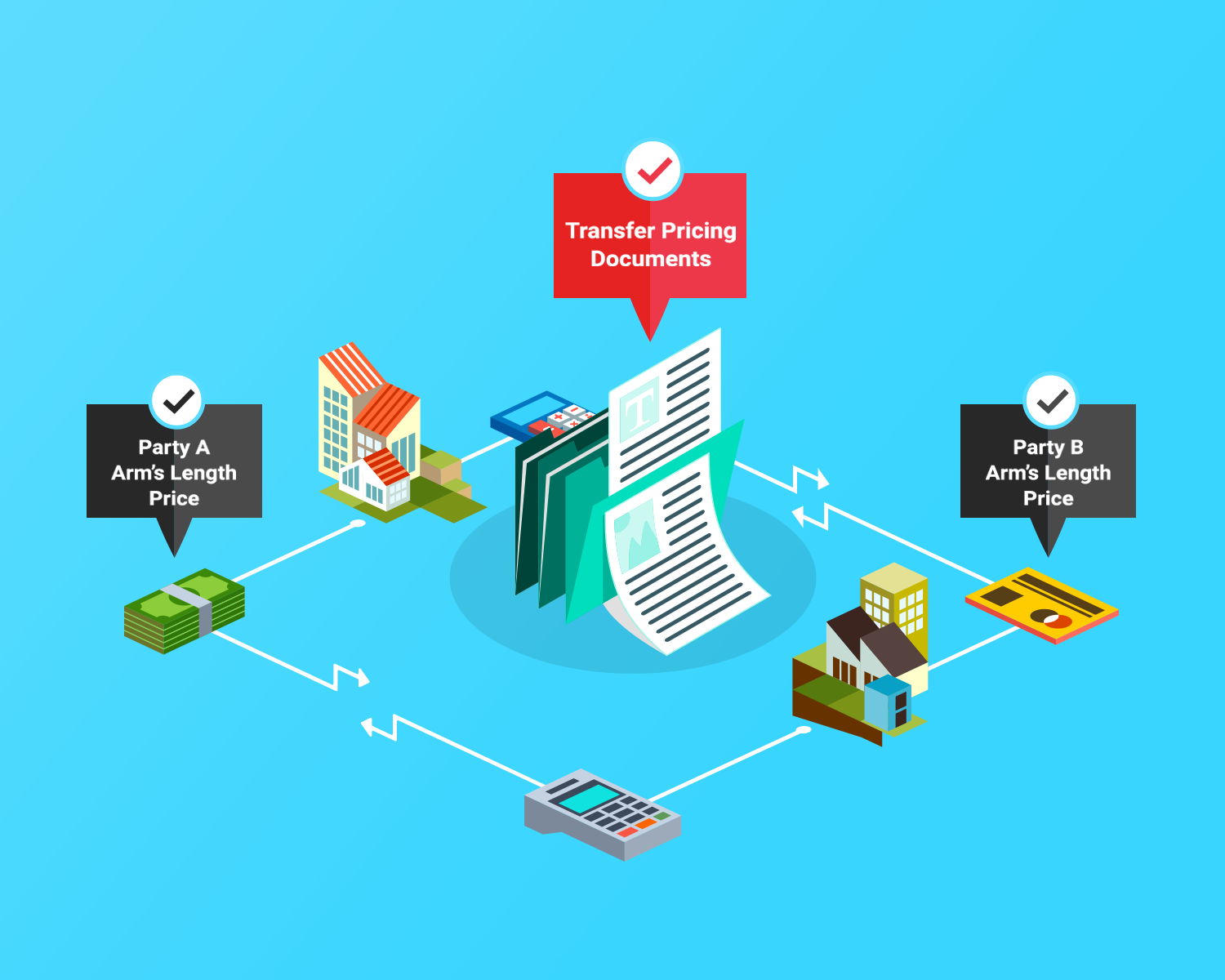
- Transfer Pricing governs the pricing of goods, services, and intangibles between related entities in different tax jurisdictions and must follow the arm's length principle set by KRA.
- Multinationals should maintain a formal Transfer Pricing Policy plus a Master File (high-level overview of the global group) and a Local File (transaction-level detail for the Kenyan entity), updated annually.
- Related-party transactions include sales or purchases of goods, provision of services, licensing of intangibles, and intercompany loans and financing.
- Kenya allows several methods including Comparable Uncontrolled Price (CUP), Resale Price, Cost Plus, Transactional Net Margin Method (TNMM), and Profit Split, and KRA requires a documented rationale for the method chosen.
- Non-compliance can result in transfer pricing adjustments, financial penalties of up to 5% of the value of non-compliant transactions, increased audit scrutiny, and reputational risk.
Transfer Pricing in Kenya: Documentation Rules for Multinationals
Transfer Pricing ensures that related-party transactions with foreign affiliates are conducted at arm’s length. Multinationals in Kenya must maintain a Transfer Pricing Policy and comply with Master File and Local File documentation requirements to avoid KRA penalties.
Transfer Pricing (TP) is a regulatory framework that governs the pricing of goods, services, and intangibles between related entities in different tax jurisdictions. In Kenya, the Kenya Revenue Authority (KRA) requires multinationals to prepare Transfer Pricing documentation to demonstrate compliance with the arm’s length principle.
Multinationals failing to maintain proper documentation risk adjustments, penalties, and reputational damage. Adamjee Auditors provides expert guidance through Tax Compliance Services in Kenya to ensure your company remains fully compliant.
What is a Transfer Pricing Policy and Why is it Needed?
A Transfer Pricing Policy sets out the pricing methodology for related-party transactions. It ensures that profits are allocated fairly across jurisdictions and reduces the risk of KRA audits and penalties.
A Transfer Pricing Policy is a formal internal document outlining:
-
Pricing methods for intercompany transactions
-
Benchmarking processes
-
Record-keeping and reporting responsibilities
In 2026, KRA emphasizes that companies without a formal Transfer Pricing Policy may face higher scrutiny during audits, particularly for cross-border transactions with related parties. Establishing a robust policy protects both local subsidiaries and parent companies.
For expert guidance, see our Audit and Assurance Service.
Related-Party Transactions: Definition and Compliance
Related-party transactions occur between a company and its affiliates abroad. Compliance ensures these transactions are priced at arm’s length to prevent profit shifting and KRA adjustments.
Related-party transactions include:
-
Sale or purchase of goods
-
Provision of services
-
Licensing of intangibles (e.g., patents, trademarks)
-
Intercompany loans and financing arrangements
KRA’s 2026 compliance focus targets transactions where the pricing significantly deviates from market benchmarks. Documenting methodologies and economic rationale is essential to withstand audit challenges.
Our CFO Advisory Services can help develop pricing strategies that are both compliant and tax-efficient.
Master File Requirements in Kenya
The Master File provides a high-level overview of a multinational group’s global operations, including organizational structure, transfer pricing policies, and intercompany arrangements. It must be updated annually and be available for KRA review.
The Master File typically includes:
-
Organizational Structure: Parent company, subsidiaries, and key affiliates
-
Business Operations: Major products, services, and markets
-
Intangibles: Intellectual property and ownership structures
-
Financing Arrangements: Intercompany loans, guarantees, and other financial support
-
Consolidated Financial Information: Annual revenue, profit, and tax paid
For 2026, KRA may request the Master File before or during audits of local subsidiaries. Maintaining accurate and current documentation demonstrates compliance and can prevent transfer pricing adjustments.
Multinationals can leverage our Offshore Accounting Service to consolidate cross-border financial information efficiently.
Local File Requirements in Kenya
The Local File details specific intercompany transactions between the Kenyan entity and related foreign parties. It supports the arm’s length principle with transaction-level data.
The Local File must include:
-
Detailed description of each related-party transaction
-
Contractual terms and pricing
-
Financial data, including revenue, costs, and profits
-
Benchmarking studies and functional analysis
Example Table: Local File Transaction Overview
| Transaction Type | Related Party | Amount (KES) | Pricing Method | Documentation Provided |
|---|---|---|---|---|
| Sale of Goods | Parent Co. USA | 50,000,000 | CUP Method | Invoice, Benchmarking |
| Service Provision | Affiliate UK | 15,000,000 | Cost Plus | Contract, Cost Sheets |
| Licensing of IP | Holding Co. GER | 5,000,000 | TNMM | License Agreement, Royalties |
For 2026, KRA specifically examines Local File supporting evidence, including contracts and e-invoices. Companies using Bookkeeping Services can ensure all intercompany transactions are fully documented.
Transfer Pricing Methods Applicable in Kenya
Kenya allows multiple transfer pricing methods, including Comparable Uncontrolled Price (CUP), Resale Price, Cost Plus, Transactional Net Margin Method (TNMM), and Profit Split. Choose the method that best reflects economic reality.
Common Methods:
| Method | Application |
|---|---|
| Comparable Uncontrolled Price (CUP) | Goods/services sold to unrelated parties |
| Resale Price Method (RPM) | Resale of goods purchased from a related party |
| Cost Plus Method | Service transactions, manufacturing costs |
| Transactional Net Margin Method (TNMM) | Service or IP transactions with profit margins |
| Profit Split Method | Integrated operations with shared risks |
KRA requires a rationale for the selected method. Documentation must show that the chosen method results in pricing close to what unrelated parties would agree upon.
For guidance, see our Tax Compliance Services in Kenya.
Penalties for Non-Compliance
Failure to maintain a Transfer Pricing Policy or required documentation can lead to penalties of up to 5% of the transaction value, along with potential adjustments and reputational risk.
Common risks include:
-
Transfer Pricing Adjustments: KRA can adjust taxable profits based on arm’s length deviation
-
Financial Penalties: Up to 5% of the value of non-compliant transactions
-
Audit Scrutiny: Increased likelihood of full-scale audit
-
Reputational Risk: Non-compliance signals weak governance to investors
Proactive documentation using Audit and Assurance Service mitigates risks and strengthens corporate governance for multinationals.
Best Practices for Multinationals in 2026
Implement a Transfer Pricing Policy, maintain Master File and Local File annually, and integrate documentation into accounting and reporting systems for audit readiness.
-
Draft a formal Transfer Pricing Policy covering all intercompany transactions
-
Conduct benchmarking studies and maintain evidence for each transaction
-
Update Master File and Local File annually
-
Use e-invoicing and bookkeeping systems to track transactions
-
Leverage Company Secretarial Services for compliance with Companies Act reporting
Adamjee Advisory Insights
-
2026 focus: KRA will scrutinize multinational subsidiaries more closely, especially in manufacturing, services, and IP-intensive sectors
-
Integration of Transfer Pricing into monthly financial reviews reduces year-end adjustments
-
Cross-border financing and royalty payments require careful structuring to comply with local and international rules
-
Leverage Offshore Accounting Service for consolidated reporting across jurisdictions
Transfer Pricing in Kenya is a critical compliance area for multinationals engaging in related-party transactions abroad. A formal Transfer Pricing Policy, together with Master File and Local File documentation, ensures adherence to KRA rules and minimizes audit and penalty risks.
Companies that integrate TP documentation into accounting systems and use expert advisory services can maintain full compliance, optimize cross-border operations, and demonstrate transparency to KRA.
Gain Clarity and Confidence in Your Finances Navigate the complexities of compliance, tax, and financial management with a trusted partner. Adamjee Auditors, a member of Santa Fe Associates International (SFAI), provides world-class audit, tax, and advisory services to help your business achieve its goals.
Schedule a consultation with our expert team in Nairobi or Mombasa to discuss your business needs.
Nairobi Office 1st Floor, Le’Mac Building, Church Road, off Waiyaki Way, Westlands +254 717 908 241 info@adamjeeauditors.com
Mombasa Office Suite 401, Motorwalla Building, Jomo Kenyatta Road +254 703 899 606 / +254 717 908 241 info@adamjeeauditors.com https://adamjeeauditors.com/